
Care Planned to Support Your Jawbone
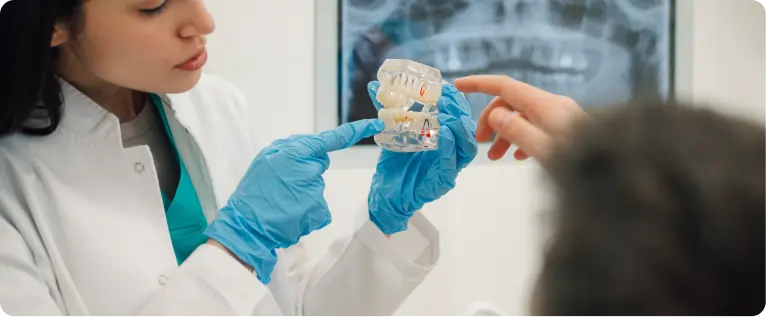
At Jane Clair Dental, we start with an exam and digital X-rays. This helps us see how much bone has been lost and whether a bone graft is needed.
If you are looking for a dental bone graft near you, our North York clinic on Jane Street can help. We may recommend bone grafting before a dental implant, after a tooth extraction, or to improve jaw support.
During treatment, we numb the area to keep you comfortable. We gently open the gum and clean the site. Then we place bone graft material where support is needed. In some cases, we place a protective membrane over the graft. The area is then closed so healing can begin.
Your Dental Bone Graft Appointment May Include
Our team on Jane Street in North York focuses on treatment that is precise, well-planned, and designed around your long-term restorative goals.
- Exam, imaging, and treatment planning
- Grafting procedure with aftercare guidance
Types of Dental Bone Grafts
Different types of dental bone grafting may be recommended depending on the location of the bone loss and the treatment goal.
- Socket graft: Done at the time of extraction to help preserve bone in the socket.
- Block bone graft: Often used when there is more significant bone loss in one area.
- Sinus lift graft: Used in the upper back jaw when more bone height is needed below the sinus.
- Ridge augmentation: Helps rebuild the width or height of the jaw after shrinkage.
The graft material itself may come from your own body, a donor source, an animal source, or a synthetic substitute, depending on what your case needs.
Recovery After Dental Bone Grafting
Initial recovery after a dental bone graft in North York is usually manageable, and many patients report only mild to moderate discomfort. Common early effects include tenderness, swelling, bruising, minor bleeding, and temporary chewing difficulty. Initial recovery is often about a week, but the graft itself usually needs at least three months to mature, and larger grafts can take much longer. If the graft is being done before an implant, it is often best to place the implant within about six to twelve months after the graft has healed so the rebuilt bone is used effectively.
- Use ice packs early
- Eat soft foods for a few days
- Avoid smoking and vigorous rinsing
When Bone Grafting May Be Recommended
A dental bone graft may be recommended when:
- Bone loss has happened after tooth extraction
- A future implant site needs more support
- Gum disease has affected the jawbone
- Trauma has damaged the bone
- The upper back jaw needs a sinus lift
- Better support is needed before certain dentures or restorations
Bone grafting is often less about cosmetics and more about rebuilding enough healthy structure for strong, predictable treatment.