Dr Reddy was so kind and understood my problem well. Clinic was clean and the staff was very friendly.
Gum Graft North York: Rebuild Gum Support with a Connective Tissue Graft
A connective tissue graft is a gum graft that moves a thin layer of tissue from the roof of your mouth onto a root that receding gums have left bare. It aims to cover the root, thicken thin gum and ease sensitivity. Jane Clair Dental checks gum recession at 2698 Jane St in North York. We explain whether a graft suits you.
Key points:
- A connective tissue graft (CT graft) covers exposed roots and adds gum thickness.
- The tissue comes from your palate, so you heal in two places.
- Active gum disease is treated before any graft.
- Full root coverage cannot be promised.
What Is a Connective Tissue Graft?
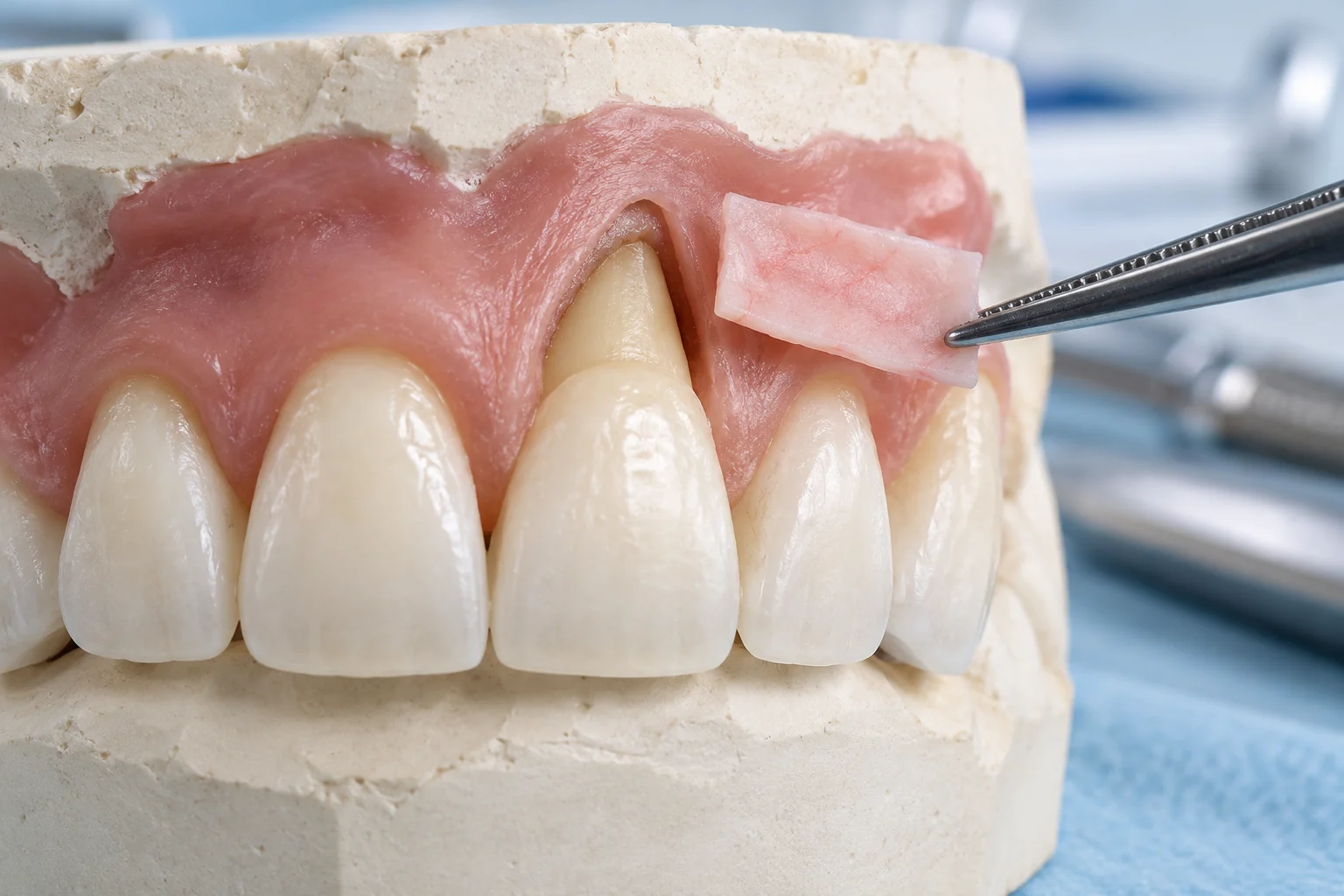
A connective tissue graft is a dental soft tissue graft that treats gum recession by placing healthy tissue over an exposed root. The dentist takes tissue from beneath the top layer of the palate and stitches the palate closed. The tissue goes over the root, and the nearby gum is moved over it to feed it a blood supply.
Dentists call this a root coverage technique. A review in the International Dental Journal places it, combined with a moved flap or a tunnel, as a well-studied surgical option for single and multiple recession sites.
What Causes Gum Recession?
Gum recession happens when the gum edge moves down the tooth and uncovers the root. Below the gum line, the root sits in bone and is held by a ligament, with gum over the top. The root has no enamel. Once exposed, it wears and decays faster.
The same review lists these causes and risk factors:
- Gum disease that has destroyed gum and bone
- Hard brushing or a stiff brush
- Thin gum you were born with
- Plaque left at the gum line
- A tight lip or cheek attachment that pulls on the gum
- Filling or crown edges below the gum line
- Smoking and diabetes
How is gum disease treated? It starts with cleaning below the gum line, and our gum disease treatment page explains each step.
What Can a Gum Graft Do for Exposed Roots?
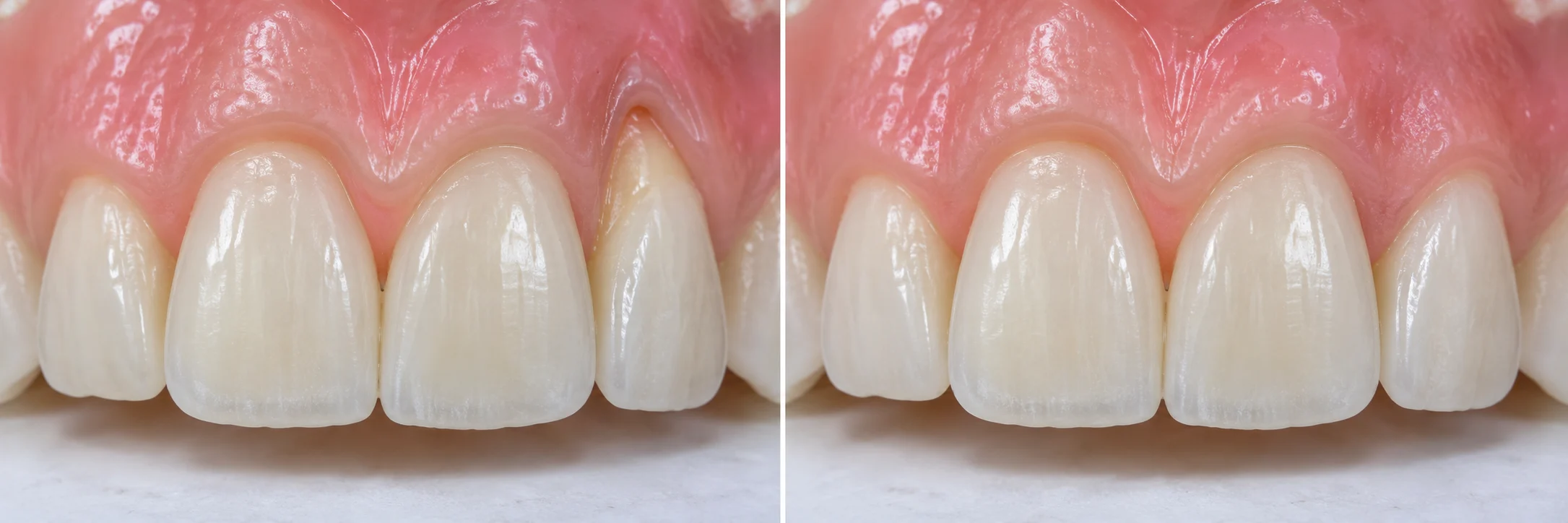
A gum graft aims to put gum back over an exposed root and thicken the gum around it. How much of the root ends up covered depends on how deep the recession is and how thin your gum is. Full coverage is not promised. The dentist explains your chances before you decide.
Before treatment, the bare root shows as a yellower band and the tooth looks longer. Before and after photos online show other people's results. Not yours.
What Are the Benefits of a Connective Tissue Graft?
The main benefit of a connective tissue graft is protection for a root surface that has no enamel.
- Aims to reduce sensitivity to hot, cold and brushing.
- Evens out the gumline where it shows when you smile.
- Matches nearby gum in colour more closely than a free gingival graft.
- Adds gum thickness, which the review links to more stable gum over time.
The trade-off? A second wound on the palate. Recovery takes one to two weeks.
How Do Connective Tissue, Free Gingival and Pedicle Grafts Differ?
A free gingival graft and a connective tissue graft differ in which layer of the palate is used and what the graft is for. A pedicle graft uses no palate tissue.
| Graft type | Tissue source | Main use | Main drawback |
|---|---|---|---|
| Connective tissue graft | Under the top layer of the palate | Covering roots, thickening gum | A second surgical site |
| Free gingival graft | Surface layer of the palate | Widening a thin band of firm gum | Less predictable root coverage, poorer colour match |
| Pedicle graft | Gum beside the tooth, moved over while attached | Covering a root next to healthy gum | Needs enough gum beside the tooth |
| Donor tissue or collagen substitute | Processed material | Avoiding a palate wound | Ask whether it is offered and suits you |
[IMAGE alt="Gloved dentist holding a dental syringe near a patient's open mouth, ready to freeze the gums" src=connective-tissue-dentistry.webp] [remove until patient consent is confirmed]
How Is a Connective Tissue Graft Done?
A connective tissue graft is done under local anaesthetic after an exam has measured your recession. Planning starts with an exam and digital X-rays at our North York dental clinic. The dentist checks each recession and looks for gum disease that needs care first. Gum grafts are done at the clinic.
- The graft site and the palate are frozen.
- The root is cleaned, and a small pouch or flap is made at the recession.
- Tissue is taken from under the top layer of the palate, which is stitched closed.
- The graft is laid over the root and stitched under the moved gum.
One graft takes about an hour. Several sites take longer.
What Should You Expect During Connective Tissue Graft Treatment?
During connective tissue graft treatment you are awake and both areas are frozen. Tell the dentist if anything hurts, and more freezing can be given.
You get a written estimate before the day. A follow-up visit checks healing and removes any stitches that do not dissolve.
When Is a Gum Graft Recommended, and When Should You Wait?
A gum graft is recommended when recession exposes a root, keeps getting worse or leaves the gum too thin to protect the tooth.
- Sensitivity that does not settle with a softer brush or desensitizing toothpaste
- An uneven gumline around the front teeth
- Thin gum at risk of more recession
- Concern about how your smile looks
A graft is not the first step if gum disease is active. That comes first, starting with a deep cleaning called scaling and root planing. Mild, stable recession with no symptoms may only need watching.
Tell the dentist if you smoke, have diabetes or take a blood thinner. Each one affects the plan. If your concern is gum that covers too much of your teeth, gum contouring treats that opposite problem.
What Are the Risks of a Gum Graft?
The main risks of a gum graft are bleeding, swelling, infection and a graft that does not take. Complications are uncommon.
- Bleeding from the graft or palate, heaviest in the first day or two
- Swelling and bruising for several days
- Infection at either site
- A graft that loses its blood supply and comes away as a pale or white patch
- Sensitivity that continues if the root is only partly covered
- Gum that does not fully cover the root
Call the clinic right away for pus, a fever, heavy bleeding or a graft that looks white and loose. Call 911 or go to the nearest hospital emergency department if you have trouble breathing or swallowing, swelling that spreads toward your eye or neck, fever with facial swelling, or bleeding that will not stop.
How Long Does a Connective Tissue Graft Take to Heal?
A connective tissue graft takes about one to two weeks for early healing, according to Cleveland Clinic. The gum keeps settling for several weeks after that. Expect swelling for three to four days. The palate gets sore too.
- Eat soft, cool foods at first, such as yogurt, eggs and pasta
- Avoid hard, crunchy and spicy food until the dentist clears you
- Do not brush or floss the graft until you are told it is safe
- Use any rinse or medicine only as your dentist directs
- Skip exercise and heavy lifting for at least the first week
How Much Does a Gum Graft in North York Cost?
A gum graft at other Toronto clinics costs about $900 to $1,500 per tooth site, based on their published prices. Your own cost comes in a written estimate after an exam.
The cost rises with the number of sites, the graft type and any gum disease care needed first. Ask about financing options and direct billing.
The CDCP Dental Benefits Guide does not list gum grafts among its covered periodontal services. An exception needs preauthorization, and the guide expects such approvals to be extremely rare. See what the CDCP covers at our clinic. We will confirm any out-of-pocket cost with you before treatment starts.
Connective Tissue Graft FAQs
Patient feedback
What Our Patients Are Saying
We’re proud of the relationships we build with our patients. Read feedback from individuals and families who have trusted us with their dental care.
Really happy I came here! They accept the CDCP, which made my visit affordable and stress-free. Great service and friendly team!
FadendasPatient feedback
Hugh describes a long relationship with the clinic, having attended for nine years at the time of his review.
Merna shares that she enjoys attending dental visits with the rest of her family.
Frank recommends the clinic and describes the dentist and staff as friendly and knowledgeable, which helped him enjoy his dental visits.