
Dr Reddy was so kind and understood my problem well. Clinic was clean and the staff was very friendly.
Custom Night Guards for Teeth Grinding on Jane St
A night guard is a thin plastic cover you wear over your teeth at night, so grinding and clenching wear down the guard and not your enamel. Jane Clair Dental fits custom night guards North York patients wear for exactly that job.
The guard helps protect your teeth. It does not cure grinding or treat snoring and sleep apnea.
Key takeaways
- A night guard helps protect your teeth from grinding damage. It does not stop the grinding itself.
- Signs of night grinding include flat or chipped teeth, a tight jaw on waking and a dull headache at the temples.
- A custom guard is made from impressions of your teeth and adjusted to your bite. A store-bought guard costs less and fits less closely.
- Grinding with loud snoring or daytime sleepiness needs a doctor's check for sleep apnea first.
- Long wear can change how your teeth meet. Bring the guard to your check-ups.
- Other Toronto clinics publish prices of about $400 to $650 for a custom night guard. The Canadian Dental Care Plan does not cover night guards.
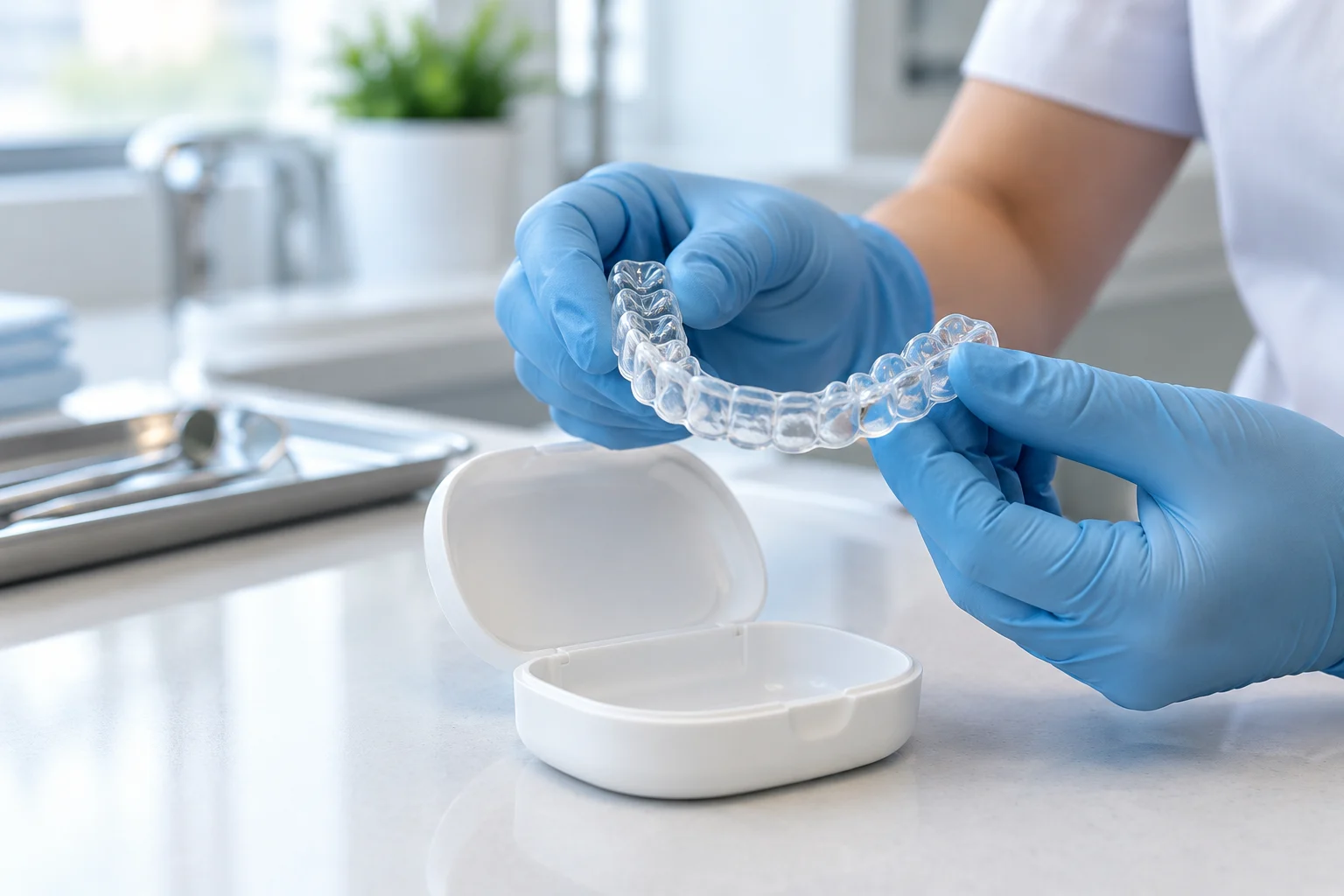
What is a night guard?
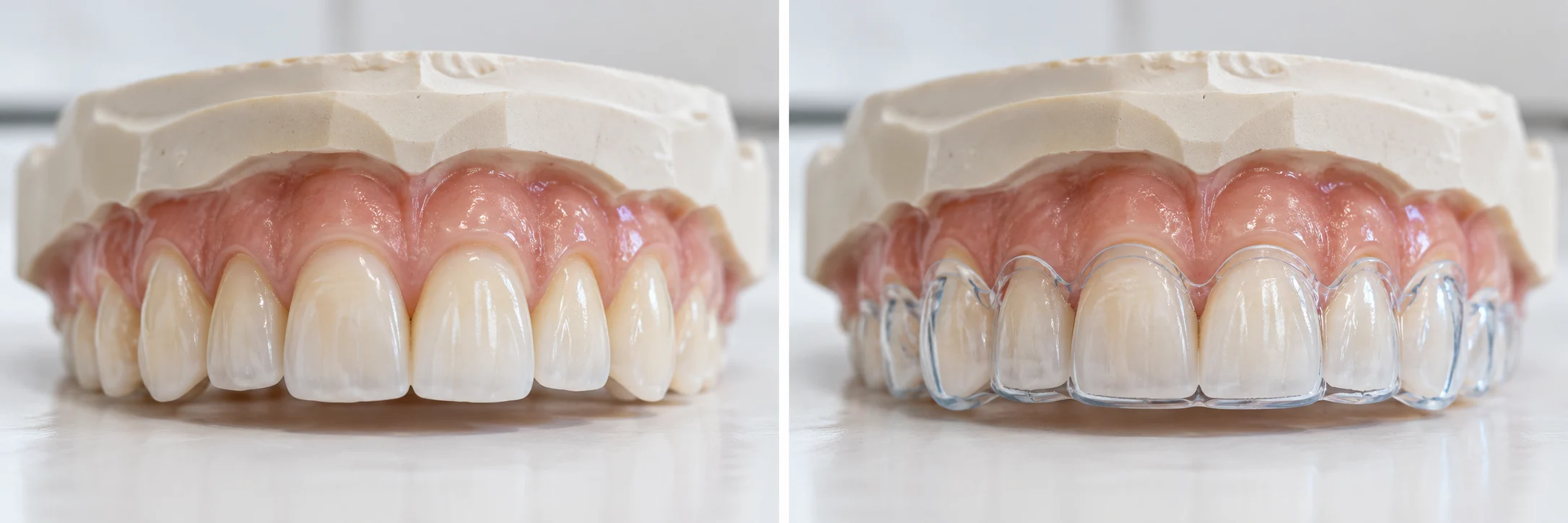
A night guard is a removable mouth guard for clenching and grinding during sleep. Dentists also call it an occlusal guard, and you will see it spelled "nightguard" too. It is made of hard acrylic, a softer plastic or both, and it fits over your upper or lower teeth.
Grinding in your sleep has a medical name: sleep bruxism. The guard sits between your top and bottom teeth so they cannot rub together.
Sports mouthguards are a different appliance. They are thicker and built to absorb a blow, so see our custom sports guards for hockey or soccer.
Small guard, big protection: what does it protect?
A night guard protects the biting surfaces of your teeth and the dental work on them. Mayo Clinic lists flattened, chipped, fractured or loose teeth among the effects of bruxism.
- Enamel, the hard outer layer over the softer tooth underneath
- The edges of your front teeth
- Fillings, dental crowns, bridges and implants
How do you know if you grind your teeth at night?
You may not know you grind your teeth at night until your teeth or jaw show it. Mayo Clinic and the NHS list these signs:
- A partner hears grinding in the night
- Flat, chipped or worn tooth edges
- Teeth that feel more sensitive than before
- Tired or tight jaw muscles when you wake
- A dull headache that starts at your temples
- Pain that feels like an earache
- Broken sleep
A dental exam can show wear on your teeth. It cannot tell you why you grind, which needs a talk about your sleep, stress and health.
What causes teeth grinding while sleeping?
Nobody fully understands what causes teeth grinding while sleeping. Mayo Clinic says sleep bruxism may be a chewing activity linked with brief disturbances in sleep. These raise the risk:
- Stress and anxiety
- Caffeine, alcohol and smoking
- Some medicines, as a side effect
- Snoring and sleep apnea
- Family members who grind
Benefits of night guards: what can and can't they do?
A night guard helps protect your teeth by taking the wear of grinding in their place. It does not stop the grinding. A 2007 Cochrane review of occlusal splints found too little evidence that splints treat sleep bruxism. It did find a possible benefit for tooth wear.
What a guard can do:
- Keep your teeth apart, which helps stop grinding damage
- Wear down in place of your enamel
- Ease morning jaw tightness or headaches for some people
What it cannot do:
- Cure bruxism or remove its cause
- Fix a jaw joint problem by itself. Jaw pain or locking that lasts belongs with our TMJ and TMD therapy.
- Treat snoring or sleep apnea
Grinding damage is easier to deal with before a tooth cracks.
Custom protection for grinding: custom or store-bought night guard?
A custom night guard fits your teeth and bite more closely than a store-bought one. Cleveland Clinic calls custom guards more comfortable and more protective against grinding. Store-bought guards cost far less and you can buy one today.
| Custom guard from a dentist | Boil-and-bite guard | Stock guard | |
|---|---|---|---|
| How it fits | Made from impressions of your teeth and adjusted to your bite | You soften it in hot water and bite into it | Ready-made, worn as it comes |
| Exam first | Yes: teeth, bite and jaw | No | No |
| How long it lasts | Several years with care | Replaced a few times a year | Replaced a few times a year |
| Cost | Highest | Low | Low |
| Wrong choice when | You snore loudly or feel sleepy in the day, until a doctor checks you | You grind hard or plan to wear it nightly for months | Same as boil-and-bite |
Fit matters for more than comfort. A 2014 British Dental Journal survey looked at store-bought grinding guards sold online. None of the designs made sure every tooth was covered. A guard that covers only part of your teeth carries a risk of unwanted tooth movement over months of wear.
Mail-order kits sit in between. You take your own impression at home. Check whether the service includes a dental exam and a fit check of the finished guard against your bite.
Night guards North York: what happens at your appointment?
A night guard starts with an exam of your teeth, bite and jaw to see whether grinding or clenching is causing damage. If a guard suits you, the steps are:
- The exam. Tell the dentist about your sleep, any snoring, stress and medicines.
- A bite assessment and impressions of your teeth.
- A fitting once the guard is made. The dentist checks that your teeth touch it evenly and adjusts it.
- Custom fit and care guidance.
- A check of the guard and your bite at your regular visits.
Ask the team how long your guard takes to make.
Types of night guards: soft, hard or dual-laminate?
Night guards come in soft, hard and dual-laminate versions. The dentist chooses after looking at your wear, your bite and how hard you clench.
- Soft guards are flexible plastic.
- Hard guards are rigid acrylic.
- Dual-laminate guards are soft inside and hard outside.
- Thermoplastic guards soften with heat to fit. Store-bought boil-and-bite guards work this way.
Ask which material suits your grinding, and why.
What is the downside of wearing a night guard?
The main downsides of wearing a night guard are a settling-in period, soreness from a poor fit, and bite changes with long wear. Each one is manageable if you know to watch for it.
- Getting used to it. Expect a new guard to feel bulky at first.
- A poor fit. Cleveland Clinic notes a guard that does not fit can make your teeth, gums or jaw sore. One that rocks or presses on one tooth needs adjusting.
- Bite changes. In 2018, dentists in the British Dental Journal reported cases where night guard wear left the front teeth no longer meeting. They called follow-up visits essential. Tell the team if your bite feels different.
- Germs. Any guard picks up bacteria from your mouth, so brush your teeth before you put it in.
- Wear. Guards crack, thin and loosen with use, and a worn guard stops protecting you.
When is a night guard not the right first step?
A night guard is not the right first step if you snore loudly, stop breathing in your sleep or feel sleepy during the day. Mayo Clinic links sleep bruxism with snoring and sleep apnea. Your family doctor can check you and arrange a sleep study.
This matters for the guard itself. In a sleep-lab study of 10 people with sleep apnea, a standard upper guard made breathing problems worse in several of them. Tell the dentist about any snoring first.
- Children. Grinding is common in young children, and most grow out of it by adulthood. Mention it at your child's next visit. Our children's dentistry page explains those visits.
- Daytime clenching. It needs its own assessment and plan. Wear a guard by day only if your dentist tells you to.
Caring for your night guard: how long does it last?
A custom night guard can last several years with good care, according to Cleveland Clinic. How hard you grind and the material both affect that, and a store-bought guard needs replacing much sooner.
- Bring the guard to every dental check-up and cleaning. The dentist looks for cracks and thin spots and checks your bite.
- Replace it if it cracks, gets holes or feels loose.
- Store it dry in a vented case, away from heat and pets.
How much does a custom night guard cost in Toronto?
Other Toronto clinics publish prices of about $400 to $650 for a custom night guard. Your own cost comes in a written estimate after an exam.
What changes the price:
- The material
- An upper guard, a lower guard or both
- The exam and any X-rays needed first
- How much adjusting the fit takes
Private dental plans differ on night guards, so check with your insurer before you go ahead. Direct billing is available, and you can ask about financing options.
The Canadian Dental Care Plan lists night guards as an exclusion in its Dental Benefits Guide. The CDCP will not pay for one, but it still helps with care such as exams and cleanings, as our CDCP page explains.
Night guard FAQs
Patient feedback
What Our Patients Are Saying
We’re proud of the relationships we build with our patients. Read feedback from individuals and families who have trusted us with their dental care.
Really happy I came here! They accept the CDCP, which made my visit affordable and stress-free. Great service and friendly team!
FadendasPatient feedback
Hugh describes a long relationship with the clinic, having attended for nine years at the time of his review.
Merna shares that she enjoys attending dental visits with the rest of her family.
Frank recommends the clinic and describes the dentist and staff as friendly and knowledgeable, which helped him enjoy his dental visits.