Dr Reddy was so kind and understood my problem well. Clinic was clean and the staff was very friendly.
Protect your teeth and smile with a sports guard
Jane Clair Dental makes custom sports mouthguards in North York for children, teens and adults who play contact or high-impact sports. Each guard is made from an impression or scan of your own teeth and cushions a hit to the face, which lowers the risk of broken teeth and cut lips.
Key takeaways:
- A sports guard covers the upper teeth and cushions the lips, tongue and cheeks.
- The American Dental Association lists three types: stock, boil-and-bite and custom-made. Stock guards fit worst, and custom guards fit closest and cost the most.
- A mouthguard lowers the risk of dental injury. It is not proven to prevent concussion.
- Knocked-out adult tooth: keep it in milk and see a dentist right away. Never put a baby tooth back in.
- Children and teens outgrow guards and need refits as their mouths grow.
- Your own cost comes in a written estimate after an exam.
What is a sports mouth guard?
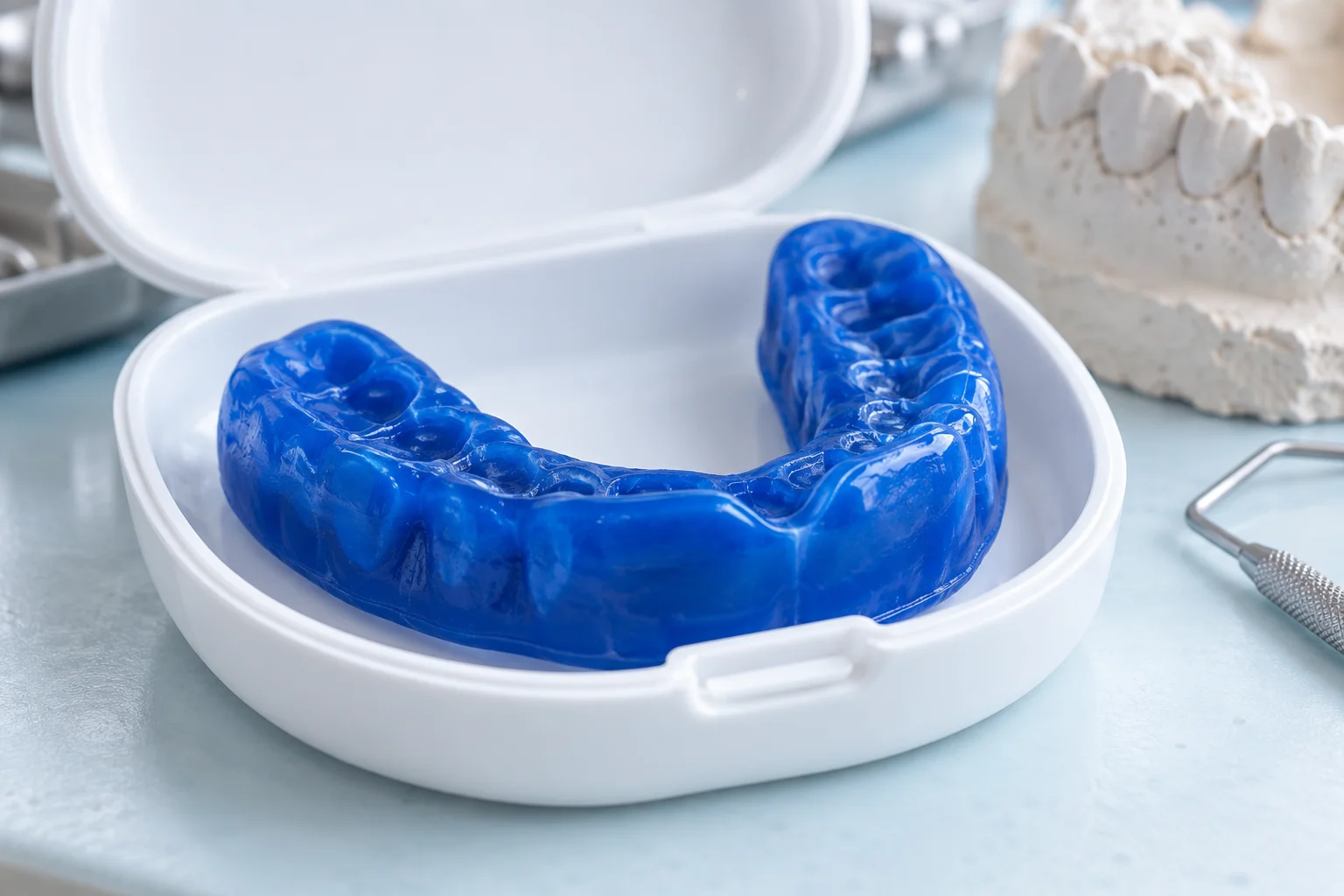
A sports mouth guard is a soft cover worn over the teeth during sport to cushion hits and falls. You will also see it called a mouth protector or a sportsguard. Most guards cover the upper teeth because they stick out further and take the brunt of a blow.
- Helps protect teeth from chips and cracks
- Keeps the lips and cheeks off the edges of the teeth
- Cushions the bite when the jaw takes a hit
How much protection does a mouthguard give active players?
Mouthguard use lowers the risk of sport-related dental injuries, says the American Dental Association (ADA). Broken teeth and knocked-out teeth are the injuries seen most in a 2019 review the ADA cites.
A guard cannot stop every injury. A hard enough hit can still crack a tooth or hurt the jaw. A mouthguard is also not concussion protection, and the FAQ below explains what the research says.
What are the benefits of a custom sports guard?
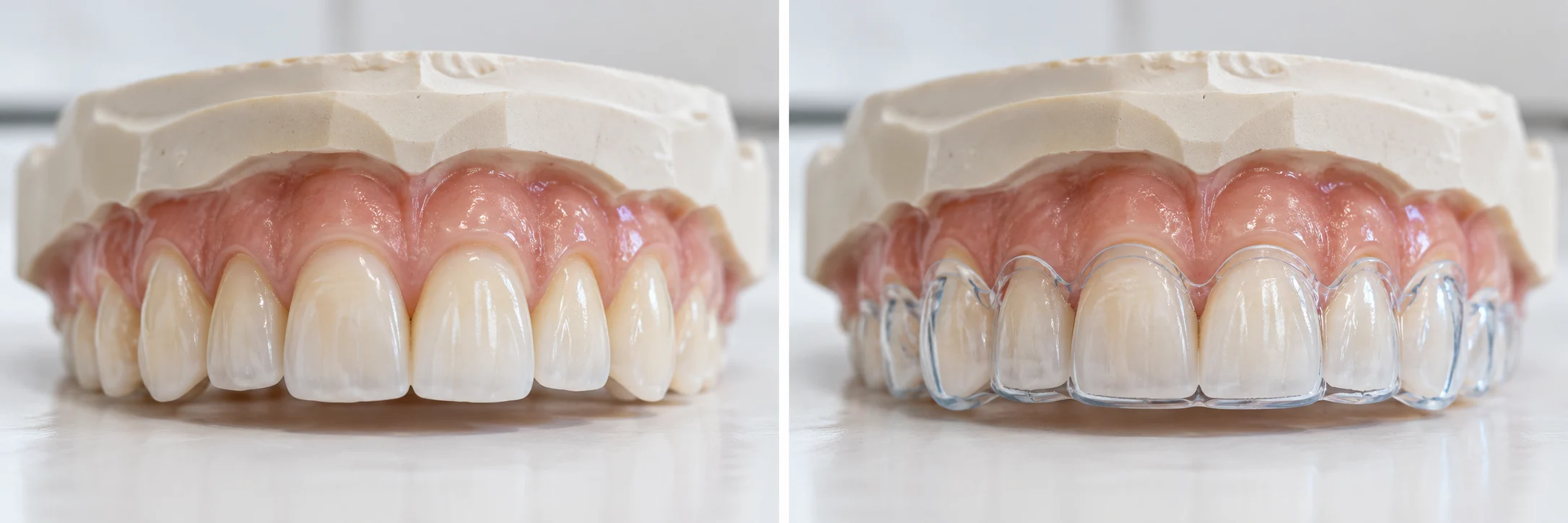
A custom sports guard is made from a model of your own teeth so it stays in place without you biting down to hold it.
- It fits your teeth. A guard that stays in place keeps covering your teeth when a hit comes.
- It is easier to breathe and talk in. Bulky stock guards make both harder.
- It is comfortable enough to keep in. One study the ADA cites found custom guards were more comfortable to wear.
- It suits braces and dental work. Ask the team what design fits your mouth.
- Fit checks for children. A child needs regular fit checks and a new guard as teeth and jaws grow.
The trade-off is cost and time, because a custom guard costs more than a store guard and needs dental visits.
[IMAGE alt="Person wearing a pink hand wrap placing a clear mouthguard over their upper teeth" src=Sports-Guard.webp] [remove until patient consent is confirmed]
Which sports need a mouthguard?
The ADA recommends a mouthguard for contact sports and for many limited-contact sports. Its contact list includes hockey, football, basketball, soccer, rugby and martial arts. Baseball, gymnastics, skateboarding and skiing are on its limited-contact list.
Falls cause injuries too, so a gymnast or skateboarder can break a tooth without touching another player.
What happens at a sports guard appointment?
A sports guard appointment starts with an exam of your teeth and gums. Tell the team which sport you play and whether you wear braces or a retainer.
- Exam of your teeth, gums and any dental work
- An impression or scan of your teeth
- Your guard is made from that model
- A fitting visit to check the fit, with wear and care guidance
Custom mouthguard vs boil-and-bite vs stock: which should you choose?
A custom mouthguard gives the closest fit and a stock guard fits worst. Boil-and-bite guards sit in between. The ADA ranks stock guards as the least effective because they come in a few sizes and you have to keep your mouth shut to hold them in.
| Stock (ready-made) | Boil-and-bite | Custom-made | |
|---|---|---|---|
| How it is made | Pre-formed, sold in a few sizes | Softened in hot water, then shaped by biting | Made from an impression or scan of your teeth |
| Fit | Loose. You clench to hold it | Better, if you follow the instructions exactly | Closest fit to your teeth |
| Breathing and talking | Bulky and harder | Depends on how well it moulded | Made to fit, so it leaves room to breathe and talk |
| Cost | Lowest | Low | Highest. Needs dental visits |
| Wrong choice when | It shifts, or you clench to keep it in | You wear braces and mould it yourself | Ask whether it can be ready before your event |
A boil-and-bite guard that moulds poorly leaves a loose fit, and a dental professional can help with the final moulding over braces. The guard that works is the one you wear at every game and practice.
Is your child's mouth changing every few months? Ask the team whether a custom guard or a store guard makes more sense for now. Our children's dentistry page covers dental care through those years.
How much do sports mouthguards cost in North York?
Other Toronto clinics publish prices of about $150 to $350 for a custom sports guard. Your own cost comes in a written estimate after an exam.
Three things change the price. The material and thickness the guard needs for your sport is the first. Braces add design work and refits. A guard for both upper and lower teeth costs more than an upper guard alone.
Direct billing to insurance is available and you can also ask about financing options. Patients with Canadian Dental Care Plan coverage are welcome and our CDCP page explains what the plan covers. CDCP does not cover sports mouthguards. The team will confirm any out-of-pocket cost with you before treatment starts.
When should a sports guard be replaced?
Replace a sports guard as soon as it is worn, cracked or loose. Check it before each season. A guard you have to clench to keep in place no longer fits well.
Children and teens need new guards sooner because their teeth and jaws are still growing. Adults need a new one when a crown or other dental work changes the shape of the teeth. Bring your guard to your checkups so the team can check the fit.
What should you do if a tooth is knocked out during a game?
A knocked-out adult tooth needs a dentist right away. Speed matters. The sooner a dentist sees it, the better the chance of saving it.
- Pick the tooth up by the crown, the white part. Do not touch the root.
- Put it in a small container of milk.
- Call (416) 742-3636 right away. If the clinic is closed or cannot see you right away, go to another emergency dental provider or a hospital.
Never put a knocked-out baby tooth back in. It can damage the adult tooth growing underneath. Take the child to a dentist right away.
For a chipped or broken tooth, find the piece and keep it in milk. Our dental emergencies page covers other injuries and the emergency dentist page explains how to reach us.
A hit hard enough to knock out a tooth can also injure the head. Call 911 if the player is unconscious, lost consciousness or had a seizure, as Ontario's concussion guidance advises. Call 911 too for repeated vomiting, a headache that gets worse, neck pain, double vision or weakness in an arm or leg. A player who is awake with other signs of concussion stops playing and goes to an emergency department or their family doctor or nurse practitioner.
Call 911 or go to the nearest hospital emergency department if you have trouble breathing or swallowing, swelling that spreads toward your eye or neck, fever with facial swelling, or bleeding that will not stop.
Sports guard FAQs
Patient feedback
What Our Patients Are Saying
We’re proud of the relationships we build with our patients. Read feedback from individuals and families who have trusted us with their dental care.
Really happy I came here! They accept the CDCP, which made my visit affordable and stress-free. Great service and friendly team!
FadendasPatient feedback
Hugh describes a long relationship with the clinic, having attended for nine years at the time of his review.
Merna shares that she enjoys attending dental visits with the rest of her family.
Frank recommends the clinic and describes the dentist and staff as friendly and knowledgeable, which helped him enjoy his dental visits.