
Care focused on comfort and safety
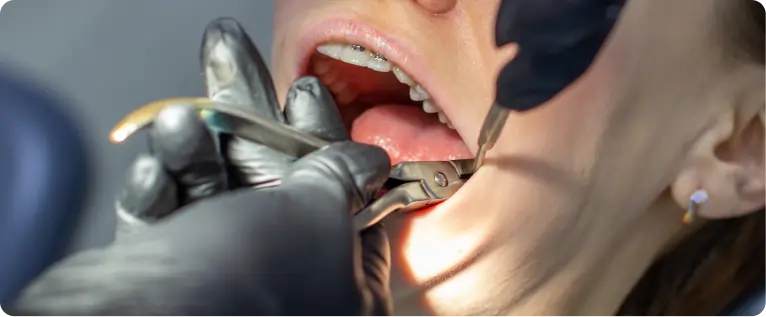
At Jane Clair Dental, we begin with an exam and, when needed, X-rays to understand the tooth, roots, and surrounding bone before treatment. If you are searching for tooth extractions near you, our North York dental clinic on Jane St offers care for both routine and more complex cases, including teeth that are badly broken, infected, or impacted. X-rays and a full review of your symptoms help determine whether the tooth should be removed or whether another treatment may still save it.
A routine extraction usually involves numbing the area, gently loosening the tooth, and removing it. If the tooth is broken at the gumline, impacted, or harder to access, a surgical extraction may be needed, sometimes with a small incision or sectioning of the tooth. Most single tooth extractions are completed in about 30 to 60 minutes.
What Your Tooth Extractions Appointment May Include
Our team on Jane Street in North York focuses on treatment that is efficient, well-planned, and as comfortable as possible.
- Exam, X-rays, and diagnosis
- Numbing, removal, and aftercare guidance
Types of Tooth Extraction
Different types of tooth extraction in North York may be recommended depending on the tooth and how accessible it is.
- Simple extraction: Usually done when the tooth is visible and can be removed with routine instruments.
- Surgical extraction: Often needed for impacted teeth, broken teeth, or teeth below the gumline.
- Wisdom tooth extraction: Common when wisdom teeth are impacted, painful, or causing crowding.
- Emergency tooth extraction: May be necessary when severe pain, swelling, trauma, or infection requires urgent treatment.
Recovery After Tooth Extraction
Healing after a tooth extractions near you usually starts with formation of a blood clot in the socket. Mild bleeding, swelling, bruising, and discomfort can happen at first, and many patients feel much better within a few days. Most people return to normal daily activity within 48 to 72 hours, although full bone healing takes much longer. Common aftercare advice includes resting, using ice packs, eating soft foods, taking medications as directed, and avoiding straws, smoking, vaping, and forceful rinsing. These steps help lower the risk of dry socket and delayed healing.
- Rest and use ice early
- Avoid straws and smoking
- Eat soft foods for comfort
When Tooth Extraction May Be Urgent
In some cases, emergency tooth extraction in North York may be needed. Warning signs can include severe tooth pain, facial swelling, pus, bleeding, trauma, a badly broken tooth, or an abscess that cannot wait. If the pain keeps getting worse or swelling is spreading, it is important to contact a dentist as soon as possible. Severe tooth pain, facial swelling, infection, impacted wisdom teeth, broken teeth, and dental trauma may all require urgent assessment. A dentist can examine the area, identify the cause, and recommend whether tooth removal or another treatment is needed to protect your oral health.
- Severe pain and swelling matter
- Early treatment helps prevent complications