
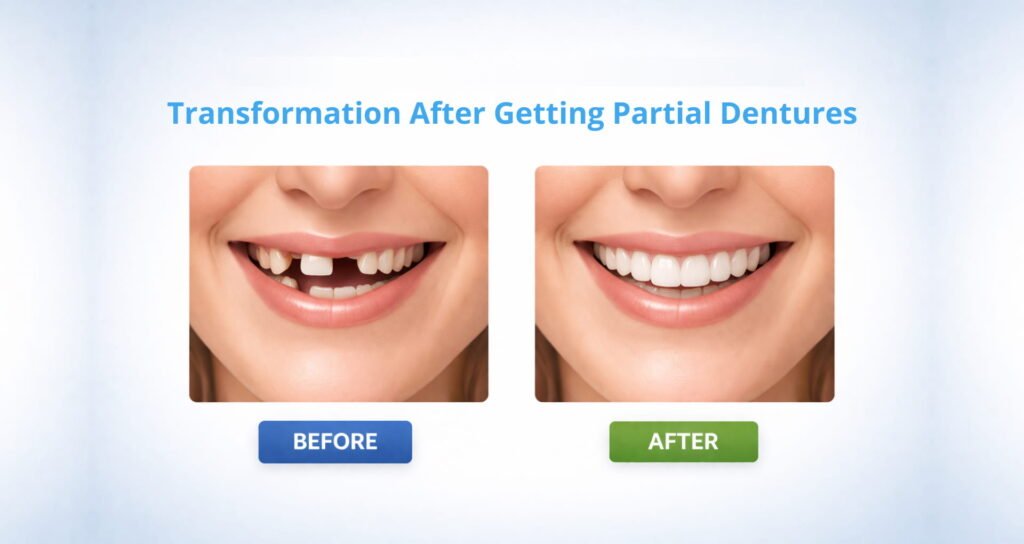
Partial dentures can restore missing teeth and improve your smile appearance and functions. Seeing before and after partial dentures results helps you understand how the treatment can transform your confidence, speech, and ability to chew comfortably.
What Are Partial Dentures?
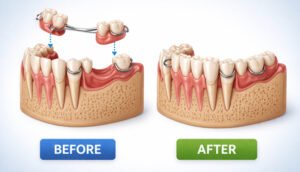
Partial dentures are removable dental appliances used to replace one or more missing teeth. They are designed to fit comfortably in your mouth and attach to your natural teeth.
A partial denture usually includes:
- Artificial teeth that match the color of your natural teeth
- A gum-colored base
- Small clasps or connectors that hold the denture in place
At North York Dentists recommend partial dentures when some natural teeth are still healthy and strong. Instead of replacing the entire row of teeth, the denture fills the empty spaces.
This treatment helps restore both appearance and function, allowing patients to chew and speak more comfortably.
Common Problems Before Getting Partial Dentures
Before getting partial dentures, many people experience several challenges caused by missing teeth.
Difficulty Chewing Food
Missing teeth can make it hard to chew certain foods. People often avoid foods that are crunchy, hard, or chewy. Over time, this can affect nutrition and eating habits.
Changes in Speech
Teeth play an important role in forming sounds. When teeth are missing, some words may be harder to pronounce clearly. This can lead to speech changes or discomfort when talking.
Smile and Facial Appearance
Gaps in the teeth can change the look of your smile. In some cases, missing teeth can also cause the lips or cheeks to appear slightly sunken.
Shifting of Remaining Teeth
When a tooth is missing, nearby teeth may slowly move into the empty space. This shifting can affect your bite and may lead to other dental problems over time.
Lower Self-Confidence
Many patients report feeling embarrassed about their smile before treatment. This can affect social interactions, photos, and everyday conversations.
The Transformation After Getting Partial Dentures
After receiving partial dentures, many patients notice both physical and emotional improvements. While every person’s experience is different, the following changes are commonly reported.
Restored Smile Appearance
One of the most noticeable improvements is the appearance of the smile. Partial dentures fill the gaps left by missing teeth, helping create a more natural and complete look.
Modern dentures are designed to blend with natural teeth in color and shape. This makes the smile look balanced and natural.
Better Chewing Ability
Partial dentures help distribute biting pressure more evenly across the mouth. This can make it easier to eat a wider variety of foods again.
Patients often find they can enjoy meals more comfortably once they adjust to their dentures.
Improved Speech
With missing spaces filled, the tongue can move more naturally when forming sounds. This can help improve pronunciation and clarity of speech.
Most patients adjust to speaking with dentures within a short period of time.
Support for Facial Structure
Teeth help support the shape of the face. When missing teeth are replaced, the lips and cheeks receive better support.
This can help restore a more natural facial appearance.
Increased Confidence
Many people feel more confident smiling and talking after treatment. Feeling comfortable with your smile can improve social interactions and overall well-being.
What to Expect During the Partial Denture Process
Getting partial dentures usually involves several dental visits. Each step helps ensure the dentures fit comfortably and work properly.
Dental Examination
The dentist first examines your teeth, gums, and overall oral health. X-rays or scans may also be taken to understand the condition of your mouth.
This step helps determine if partial dentures are the right treatment option.
Impressions and Measurements
Next, the dentist takes impressions of your teeth and gums. These impressions are used to create dentures that fit your mouth accurately.
The dental lab then designs the artificial teeth to match your natural smile.
Fitting and Adjustments
When the dentures are ready, the dentist checks the fit and comfort. Small adjustments may be made to improve how the denture sits in the mouth.
Follow-up visits may also be scheduled to ensure everything feels comfortable.
Adjusting to Partial Dentures
It is normal for patients to need a short adjustment period after receiving partial dentures.
Some common experiences during the first few weeks include:
- Mild soreness or pressure
- Increased saliva production
- Learning how to chew with the new denture
These changes usually improve as the mouth adapts. Dentists may recommend starting with softer foods and gradually returning to normal eating habits.
If discomfort continues, a dental professional can adjust the denture to improve the fit.
Tips for Taking Care of Partial Dentures
Proper care helps partial dentures last longer and keeps your mouth healthy.
Clean Them Daily
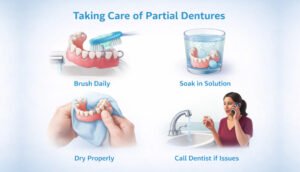
Dentures should be cleaned every day using a denture brush and a non-abrasive cleaner. This helps remove food particles and plaque. Regular cleaning also helps prevent stains and odors.
Remove Them at Night
Many dentists recommend removing dentures before sleeping. This allows the gums and oral tissues to rest.
Soaking dentures overnight in a cleaning solution can help keep them fresh.
Handle Them Carefully
Dentures can break if dropped. It is best to handle them over a soft towel or a sink filled with water.
Visit Your Dentist Regularly
Regular dental checkups are important even if you wear dentures. Dentists can check the fit of the denture and monitor your oral health.
Over time, adjustments may be needed as the shape of the gums changes.
Are Partial Dentures Right for Everyone?
Partial dentures can be a good solution for many patients, but they may not be suitable for every situation.
A dentist will consider several factors, including:
- The number of missing teeth
- The health of remaining teeth
- Gum health
- Bone support in the jaw
In some cases, other options such as bridges or dental implants may also be discussed.
The best treatment plan depends on each person’s oral health and personal needs.
When to Speak with a Dentist
If you have missing teeth and are experiencing problems with eating, speaking, or confidence, it may be helpful to talk with a dental professional.
A dentist can evaluate your oral health and explain the available treatment options. They can also answer questions about the benefits and limitations of partial dentures.
Early treatment can help prevent additional dental issues and support long-term oral health.
FAQs
What can you not eat with partial dentures?
Avoid very hard, sticky, or chewy foods such as hard candy, ice, sticky caramel, and tough meats. These foods can damage dentures or loosen them. Cut food into small pieces and chew slowly.
How long do partial dentures usually last?
Partial dentures typically last 5 to 10 years with proper care. Over time, gums and jawbone may change, so adjustments or replacements may be needed. Regular dental checkups help maintain fit and comfort.
Can partial dentures look good?
Yes, modern partial dentures are designed to look natural. Dentists match the artificial teeth to your natural tooth color and shape, helping restore your smile and improve confidence in daily interactions.
What is the average cost for a partial denture?
The cost of partial dentures varies depending on materials, design, and dental needs. In many places, they can range from $700 to $2,500 or more. A dentist can provide accurate estimates.
How many hours a day should I wear my partial denture?
Most dentists recommend wearing partial dentures during the day, usually about 8 to 16 hours. They should be removed at night to allow gums to rest and maintain healthy oral tissues.
How often do partial dentures need to be cleaned?
Partial dentures should be cleaned at least once daily using a denture brush and gentle cleaner. Rinsing them after meals also helps remove food particles and supports good oral hygiene.
Conclusion
The difference between before and after partial dentures can be significant for many patients. Replacing missing teeth can improve how you eat, speak, and smile.
Partial dentures are designed to restore function while maintaining a natural appearance. With proper care and regular dental visits, they can be a reliable solution for replacing missing teeth.
If you are considering partial dentures, a qualified dental professional can help determine whether this treatment is suitable for your situation. Getting professional guidance ensures that your dental care plan supports both your oral health and overall well-being.