
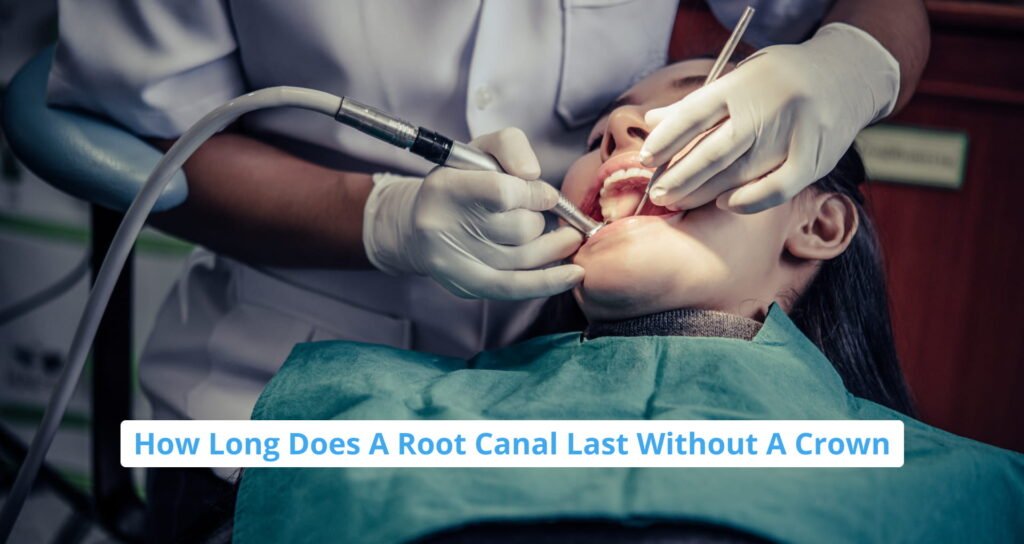
A root canal treatment removes infected pulp and seals from tooth to stop further damage. Dentists usually recommend a dental crown afterward to protect the tooth from breaking.
This guide explains how long a root canal can last without a crown and why a crown is important for long-term tooth protection.
What Is the Root Canal Procedure?
A root canal treatment removes infected or inflamed pulp from inside the tooth. After cleaning the canals, the dentist fills and seals them to prevent further infection.
The root canal last procedure typically involves these steps:
- Diagnosis and X-rays to identify infection or damage
- Removing infected pulp from the tooth inner chamber
- Cleaning and shaping the canals
- Filling the canals with a special material
- Sealing the tooth with a temporary or permanent filling
- Placing a crown to restore strength and function
While the treatment removes infection, the tooth often becomes more brittle afterward because the pulp is no longer present to provide internal moisture and nourishment.
How Long Can a Root Canal Last Without a Crown?
In some cases, a tooth with a root canal can last from a few months to several years without a crown. But this is not ideal, Dentists generally recommend placing a crown soon after treatment to prevent damage.
The root canal lasting time without crown depends on factors such as:
- The type of tooth treated
- The amount of remaining tooth structure
- Biting pressure and chewing habits
- Oral hygiene and dental care
Front teeth, which experience less chewing pressure, may last longer without crowns. Back teeth such as molars are at higher risk of fracture because they handle stronger bite forces.
For this reason, most dentists advise placing a root canal permanent crown within a short time after treatment.
How Many Years Does a Root Canal Last?
Patients often ask how many years root canal last when the treatment is done properly. With good care and proper restoration, a root canal treated tooth can last 10 to 15 years or even longer.
Some teeth remain functional for a lifetime, especially when they are protected with a dental crown.
Factors that influence longevity include:
- Quality of the root canal procedure
- Proper restoration with a crown
- Good oral hygiene habits
- Regular dental checkups
- Avoiding excessive biting forces
Without a crown, the risk of tooth fracture or reinfection increases, which can shorten the lifespan of the treated tooth.
Root Canal Permanent Filling vs Crown
After the procedure, dentists may temporarily seal the tooth with a filling. Patients often ask about root canal permanent filling vs crown and whether a filling alone is enough.
A permanent filling can seal the tooth and restore basic function. However, it does not provide the same level of protection as a crown.
See our dental crowns in North York to learn about your tooth restoration options.
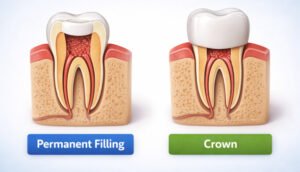
A dental crown covers the entire visible portion of the tooth and offers several advantages:
- Protects the tooth from fractures
- Restores full chewing strength
- Prevents bacteria from entering the tooth
- Improves long-term durability
For molars and premolars, most dentists recommend a root canal permanent crown rather than relying only on a filling.
Why Dentists Recommend a Crown After Root Canal
A tooth that has undergone root canal therapy is often structurally weaker than a natural tooth. This happens because:
- The inner pulp has been removed
- The tooth may already be damaged or decayed
- Less tooth structure remains after cleaning the canals
A crown acts as a protective cap, restoring strength and preventing cracks.
Without this protection, the tooth may break during normal chewing. If a fracture extends below the gum line, the tooth may no longer be salvageable.
Why Wait Two Weeks After Root Canal for Crown?
Many patients wonder why wait two weeks after root canal for crown placement. Dentists sometimes delay crown placement for several reasons:
- Monitoring healing to ensure infection has cleared
- Allowing inflammation to settle around the tooth
- Ensuring there is no pain or complications
During this time, a temporary filling or temporary crown protects the tooth until the permanent crown is placed.
Risks of Not Getting a Crown After Root Canal
Skipping the crown after root canal treatment can lead to several problems.
Tooth Fracture
Root canal treated teeth are more fragile. Without a crown, biting forces can cause cracks or breaks.
Reinfection
If the filling wears down or leaks, bacteria may re-enter the tooth and cause infection again.
Tooth Loss
Severe fractures or reinfections can lead to tooth extraction if the tooth can no longer be repaired.
These risks are why dentists strongly recommend restoring the tooth properly after root canal therapy.
Average Root Canal Cost in North York
In general, the average cost of a root canal in North York is approximately:
| Tooth Type | Estimated Cost |
| Front tooth (1 canal) | $700 – $900 |
| Premolar (2 canals) | $800 – $1,100 |
| Molar (3–4 canals) | $1,000 – $1,500 |
Root Canal vs Crown Cost
Patients often compare root canal vs crown cost, but these procedures serve different purposes.
| Treatment | Purpose | Typical Cost in North York |
| Root Canal | Removes infection from inside the tooth | $700 – $1,500 |
| Dental Crown | Protects and strengthens the treated tooth | $800 – $1,500 |
Root Canal vs Crown vs Filling
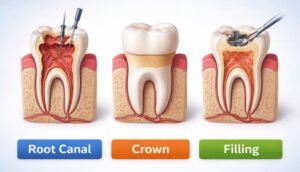
Patients sometimes compare root canal vs crown vs filling when deciding treatment options.
Dental Filling
- Used for small cavities or minor damage
- Removes decay and fills the area with composite or other materials
Root Canal
- Treats infection or severe damage inside the tooth
- Removes infected pulp and seals the canals
Dental Crown
- Covers and protects a damaged tooth
- Often used after root canal treatment or large fillings
These treatments serve different purposes and are often used together rather than replacing each other.
Crown vs Root Canal for Cracked Tooth
| Feature | Dental Crown | Root Canal |
|---|---|---|
| Purpose | Protects and strengthens a cracked tooth | Treats infection inside the tooth |
| When Needed | Minor to moderate cracks without pulp damage | Crack reaches the pulp or causes infection |
| Procedure | A cap is placed over the tooth | Infected pulp is removed and the tooth is sealed |
| After Treatment | Restores strength and appearance | Usually followed by a crown for protection |
Is a Root Canal Better Than a Filling?
A filling treats small cavities, while a root canal is needed when decay reaches the tooth pulp or causes infection. At North York Dentist recommend the treatment based on the severity of the damage.
How to Avoid Root Canal Treatment
While root canals are effective for saving teeth, prevention is always the best option. If you want to know how to avoid root canal treatment, focus on protecting your teeth from decay and infection.
Helpful habits include:
- Brushing twice daily with fluoride toothpaste
- Flossing every day
- Visiting a dentist for regular cleanings and checkups
- Treating cavities early before they reach the pulp
- Wearing a mouthguard if you grind your teeth
- Avoiding excessive sugar and acidic foods
Early dental care can often prevent the damage that leads to root canal treatment.

When to See a Dentist After a Root Canal?
If you have had a root canal but not yet received a crown, contact your dentist if you notice:
- Pain when biting or chewing
- Cracks or chips in the treated tooth
- Swelling around the gums
- Sensitivity or discomfort returning
These symptoms may indicate structural damage or infection and should be evaluated promptly.
FAQs
Is a Permanent Filling Better Than a Crown?
A permanent filling is not always better than a crown. The best option depends on how much of the tooth is damaged.
- Permanent filling: Used for small cavities or minor damage. It restores the tooth but does not cover it completely.
- Dental crown: Covers the entire tooth and provides stronger protection, especially after a root canal or large cavity.
Dentists usually recommend a crown when a tooth is weak, cracked, or heavily filled, because it prevents fractures and helps the tooth last longer.
Why Do Dentists Push for Crowns?
Dentists recommend dental crowns because they protect and strengthen damaged teeth. When a tooth has lost a large portion of its structure due to decay, cracks, or a root canal, it becomes more likely to break.
A crown acts like a protective cap that:
- Restores chewing strength
- Prevents further cracking or damage
- Improves appearance and tooth shape
- Extends the life of the natural tooth
In many cases, placing a crown can prevent tooth extraction and more complex treatments later.
What Is the Most Painful Dental Procedure?
Most dental procedures are not painful because dentists use local anesthesia. However, some treatments may cause temporary discomfort afterward.
Procedures that patients often report as more uncomfortable include:
- Tooth extractions, especially wisdom teeth removal
- Root canal treatment when infection is severe
- Dental implant surgery during the healing stage
Despite the reputation, root canals are usually no more painful than getting a filling, and they are designed to relieve pain caused by tooth infection.
Why Do Dentists Shave Down Teeth for Crowns?
Dentists shave down or reshape a tooth to create space for the dental crown so it fits properly. This process is called tooth preparation.
The tooth is slightly reduced to allow the crown to:
- Fit naturally with surrounding teeth
- Maintain a proper bite
- Stay securely bonded to the tooth
Without reshaping, the crown would appear bulky and may interfere with normal chewing
Key Takeaway
A tooth that has undergone root canal therapy can sometimes survive for months or even a few years without a crown, but it is not recommended to delay restoration.
For the best long-term results, dentists usually advise placing a dental crown soon after the root canal procedure. A crown protects the weakened tooth, restores chewing strength, and significantly increases the lifespan of the treatment.
With proper care, good oral hygiene, and regular dental visits, a root canal treated tooth with a crown can last 10 to 15 years or longer, helping you maintain a healthy and functional smile.