

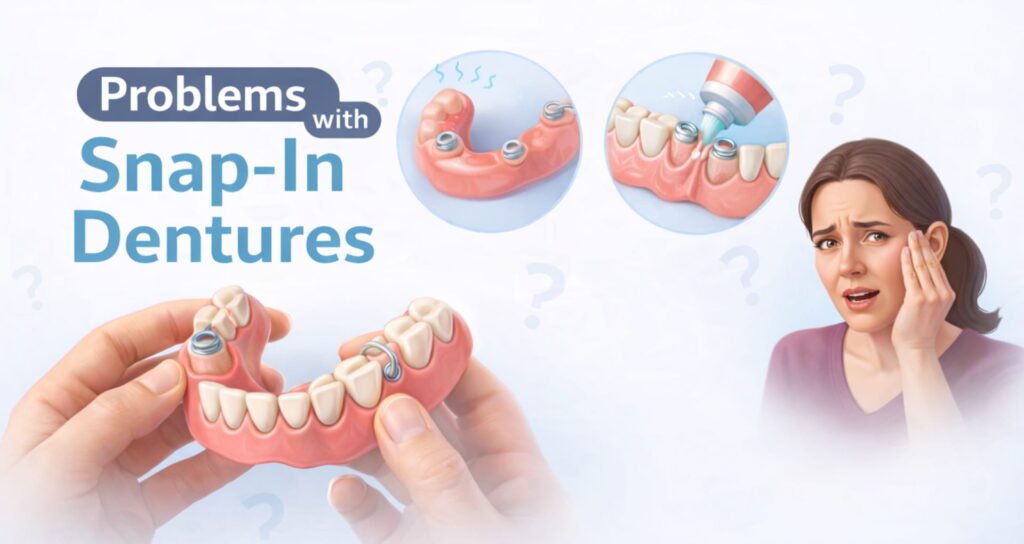
Missing teeth can affect eating, speaking, and confidence. Traditional dentures may feel loose or uncomfortable. Snap-in dentures attach to dental implants for better stability while still being removable for easy cleaning. A dentist can help determine if this option is right for you.
Snap In Dentures A Modern Solution for Secure Dentures
Snap-in dentures are removable dentures that attach to small dental implants placed in the jawbone. These implants hold the denture firmly in place, helping it stay stable while eating, speaking, and smiling.
Unlike traditional dentures that sit on the gums, snap-in dentures connect securely to implants, reducing slipping and improving comfort. They can also be removed easily for daily cleaning.
Dentists often recommend dentures supported by implants for people who have lost most or all of their teeth but still have enough healthy jawbone to support implants.
How the Treatment Works
The process of receiving snap-in dentures usually takes several steps and may require multiple dental visits.
Initial Dental Examination
A dentist first examines your teeth, gums, and jawbone. X-rays or 3D scans may be used to check bone health and determine if implants can be placed safely.
This evaluation helps the dentist create a personalized treatment plan.
Implant Placement
Small titanium implants are placed in the jawbone during a dental procedure. These implants act as artificial tooth roots.
After placement, the implants need time to fuse with the bone through a natural process called osseointegration. This healing period can take several months.
Denture Attachment
Once the implants are stable, the denture is created to fit securely on top of them. Special connectors allow the denture to snap into place.
Patients can remove the denture when needed, but it stays stable during normal activities such as eating and speaking.
Key Benefits of This Implant Supported Denture Option
Many patients choose this treatment because it offers advantages compared with traditional removable dentures.
Improved Stability
One of the most noticeable benefits is stability. Because the denture attaches to implants, it does not move as much as regular dentures.
This can help reduce slipping while talking or eating.
Better Chewing Ability
Stable dentures make it easier to chew different foods. Patients often find they can enjoy a wider variety of meals compared with traditional dentures.
Increased Comfort
Implant-supported dentures place less pressure on the gums because the implants help support the bite force.
This can make the denture feel more comfortable throughout the day.
Natural Appearance
Modern dentures are designed to match the color and shape of natural teeth. The improved stability also helps create a more natural looking smile.
Support for Jawbone Health
Dental implants stimulate the jawbone when chewing. This stimulation can help slow bone loss that sometimes occurs after tooth loss.
Comparing Snap-In Dentures vs Regular Dentures
Many patients ask about the difference between snap in dentures vs regular dentures before choosing treatment.
Stability
Traditional dentures rest directly on the gums and may require adhesives to stay in place. In contrast, snap-in dentures attach to implants, which helps keep them secure.
Comfort
Regular dentures can sometimes cause sore spots due to movement on the gums. Implant-supported dentures often reduce this movement, which may improve comfort.
Chewing Strength
Implant-supported dentures usually provide stronger chewing ability because the implants support the bite force.
Maintenance
Both types require daily cleaning, but snap-in dentures may require occasional replacement of attachment components over time.
Each option has benefits, and a dentist can help determine which one fits your needs and oral health condition.
Implants Vs Snap-In Dentures Understanding the Difference
Snap-in dentures and dental implants are both popular solutions for replacing missing teeth, but they work in different ways. Understanding the differences in stability, cost, maintenance, and comfort can help you choose the best option for your dental needs.
| Feature | Dental Implants | Snap-In Dentures |
|---|---|---|
| Structure | Individual implants replace missing teeth permanently | Dentures attach to dental implants for support |
| Stability | Fixed and do not move | Secure but removable for cleaning |
| Comfort | Feels like natural teeth | More stable than traditional dentures |
| Maintenance | Cleaned like natural teeth | Removed daily for cleaning |
| Cost | Usually higher due to multiple implants | Often more affordable than full implants |
| Best For | Replacing single or multiple teeth permanently | Patients wanting removable but stable dentures |
Cost Differences
Fully fixed implant restorations usually cost more because they require more implants and advanced restorations.
Snap-in dentures may provide a more affordable implant-supported solution for some patients.
The best option depends on oral health, bone density, budget, and personal preference.
Cost of Snap in Dentures: What to Expect
The snap in dentures cost can vary depending on several factors.
Some of the main factors that influence cost include:
- Number of implants needed
- Materials used for the denture
- Location of the dental clinic
- Additional procedures such as bone grafting
In many regions, implant supported dentures may cost between $3,000 and $10,000 or more per arch. This estimate can vary widely depending on treatment complexity.
A dental professional can provide an accurate estimate after examining your mouth and discussing treatment goals.
Some clinics may offer payment plans or financing options to make treatment more accessible.
Who May Be a Good Candidate
Not every patient is automatically suitable for implant-supported dentures. Dentists evaluate several factors before recommending this treatment.
Possible candidates often include people who:
- Have lost several or all teeth
- Want better stability than traditional dentures
- Have sufficient jawbone to support implants
- Maintain good oral hygiene habits
Patients with certain medical conditions or severe bone loss may require additional procedures before implants can be placed.
A dental consultation helps determine the safest and most effective treatment plan.
Daily Care and Maintenance
Proper care helps ensure dentures last longer and remain comfortable.
Daily Cleaning
Dentures should be cleaned daily using a soft denture brush and a non-abrasive cleaner. This removes plaque and food particles.
Cleaning the Implants
The gums and implant areas should also be cleaned gently using a toothbrush or special cleaning tools recommended by your dentist.
Removing Dentures at Night
Many dentists recommend removing dentures during sleep. This allows the oral tissues to rest and reduces irritation.
Regular Dental Checkups
Routine dental visits help monitor implant health and ensure the denture continues to fit properly.
Over time, small attachment parts may wear down and need replacement.
Possible Risks and Considerations
Like any dental treatment, implant-supported dentures have some considerations.
Possible risks may include:
- Implant healing complications
- Temporary soreness after implant placement
- Wear of attachment components over time
These risks are generally manageable when treatment is performed by experienced dental professionals and patients follow proper care instructions.
Discussing all treatment options with a dentist helps ensure informed decision-making.
Talking with a Dental Professional
If you are considering tooth replacement options, a dentist can explain whether implant-supported dentures may be appropriate for your situation.
A professional evaluation allows the dentist to review your oral health, bone condition, and personal goals.
They can also explain treatment timelines, costs, and expected results.
Getting accurate information from qualified dental professionals helps ensure safe and effective care.
FAQs
Can I eat with snap on dentures?
Yes, you can eat with snap on dentures because they attach securely to dental implants. They provide better stability than traditional dentures, making it easier to chew many foods comfortably after a short adjustment period.
How much are snap-in dentures in Canada?
Snap in dentures cost in Canada usually ranges from CAD $6,000 to $15,000 or more per arch, depending on the number of implants, materials used, and additional procedures recommended by the dentist.
What is the newest type of denture?
One of the newest denture options is implant-supported dentures, including snap-in dentures and fixed hybrid dentures. These modern designs improve stability, chewing strength, and comfort compared with traditional removable dentures.
Can a dentist pull all your teeth at once for dentures?
Yes, a dentist may remove multiple or all teeth in one visit if necessary. Immediate dentures can sometimes be placed the same day, but healing and adjustments are usually required afterward.
What disqualifies you from getting dentures?
Few conditions completely prevent dentures, but severe gum disease, untreated oral infections, or poor oral hygiene may delay treatment. Dentists usually treat these issues first before providing dentures.
Conclusion
Tooth loss can affect daily life in many ways, but modern dentistry offers solutions that improve comfort and function.
Snap in dentures provide a removable denture option that attaches securely to dental implants. This design helps improve stability, chewing ability, and overall confidence.
Understanding the differences between snap in dentures vs implants and snap in dentures vs regular dentures can help patients explore the best treatment options for their needs.
Because each person’s oral health situation is unique, consulting a dental professional is the most reliable way to determine the right solution. With proper care and regular dental visits, implant-supported dentures can be a long-lasting option for restoring a healthy smile.