Dr Reddy was so kind and understood my problem well. Clinic was clean and the staff was very friendly.
Professional Teeth Whitening on Jane St
Teeth whitening in North York at Jane Clair Dental lightens the colour of your natural teeth with a peroxide gel. A dentist checks your teeth and gums first.
Whitening changes natural teeth only. Crowns, veneers and fillings keep the shade they have now.
Key points:
- The Canadian Dental Association calls bleaching "generally safe and effective" when a dentist supervises it.
- Temporary tooth sensitivity and gum irritation are the most common side effects.
- Wait until after pregnancy. Bleaching products are not for children under 12.
- Results can last up to about two years. Smoking and dark drinks shorten that.
- Other Toronto clinics publish in-office whitening at about $450 to $650 and custom take-home trays at about $200 to $350.
- Whitening is cosmetic. The Canadian Dental Care Plan excludes it.
What Is Teeth Whitening?
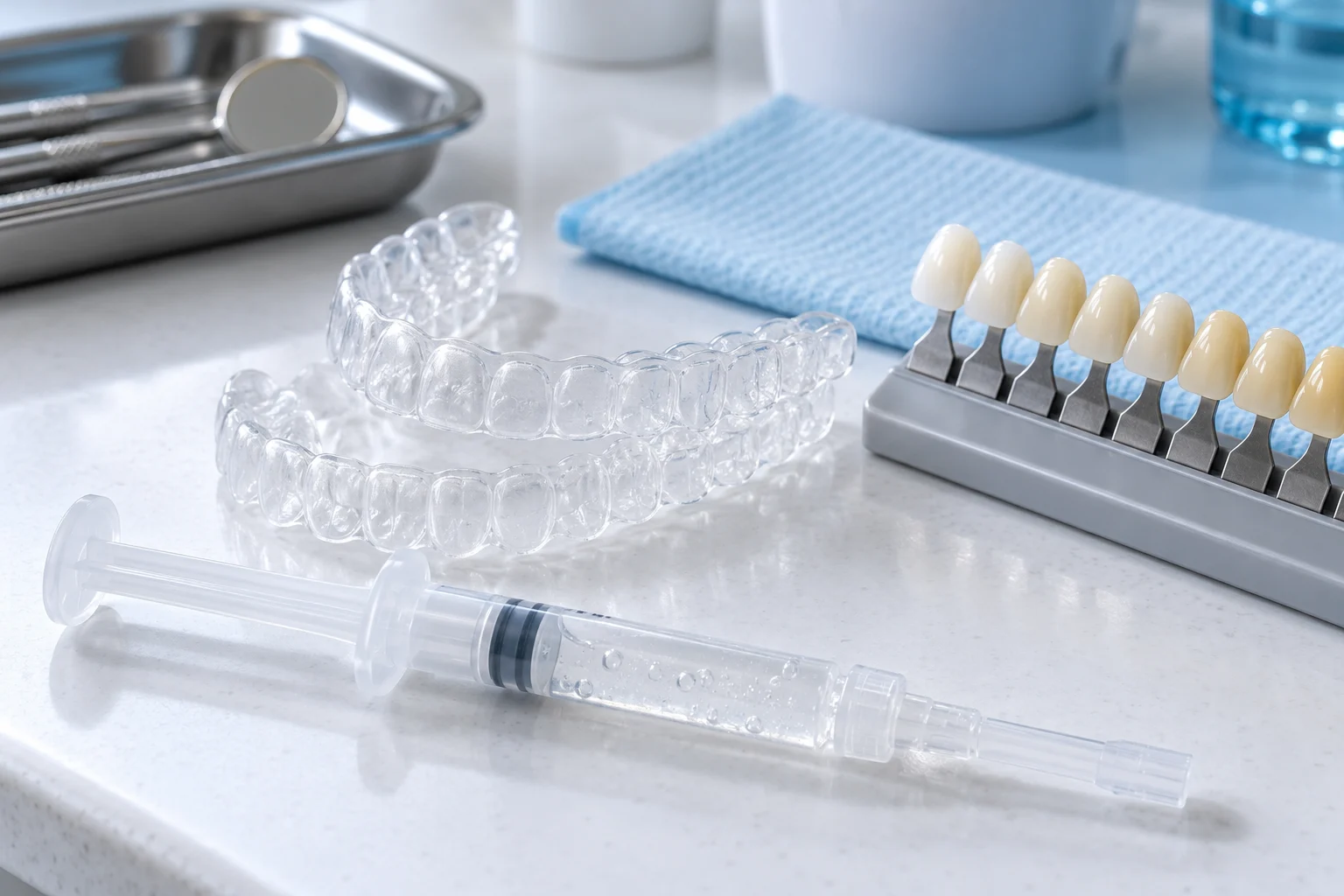
Teeth whitening, or teeth bleaching, is a cosmetic treatment that lightens natural teeth with a peroxide gel. The gel breaks down coloured compounds inside the enamel and the layer beneath it.
The Canadian Dental Association position on tooth bleaching keeps "whitening" for toothpastes that scrub off surface stain and "bleaching" for gels that change the tooth's colour.
- Lightens the natural colour of your teeth
- Lifts stain from food, drink and tobacco
- In-office whitening can show a change after one visit, and some stains need more than one session
- Take-home trays help you hold the new shade
What Difference Can a Brighter Smile Make?
Tooth whitening makes a dull or yellowed smile look lighter. The change shows most on teeth stained by food, drink or tobacco, or darkened with age.
- Reduces visible stain from coffee, tea and tobacco
- Lightens a yellowed shade
What Are the Benefits and Risks of Teeth Whitening?
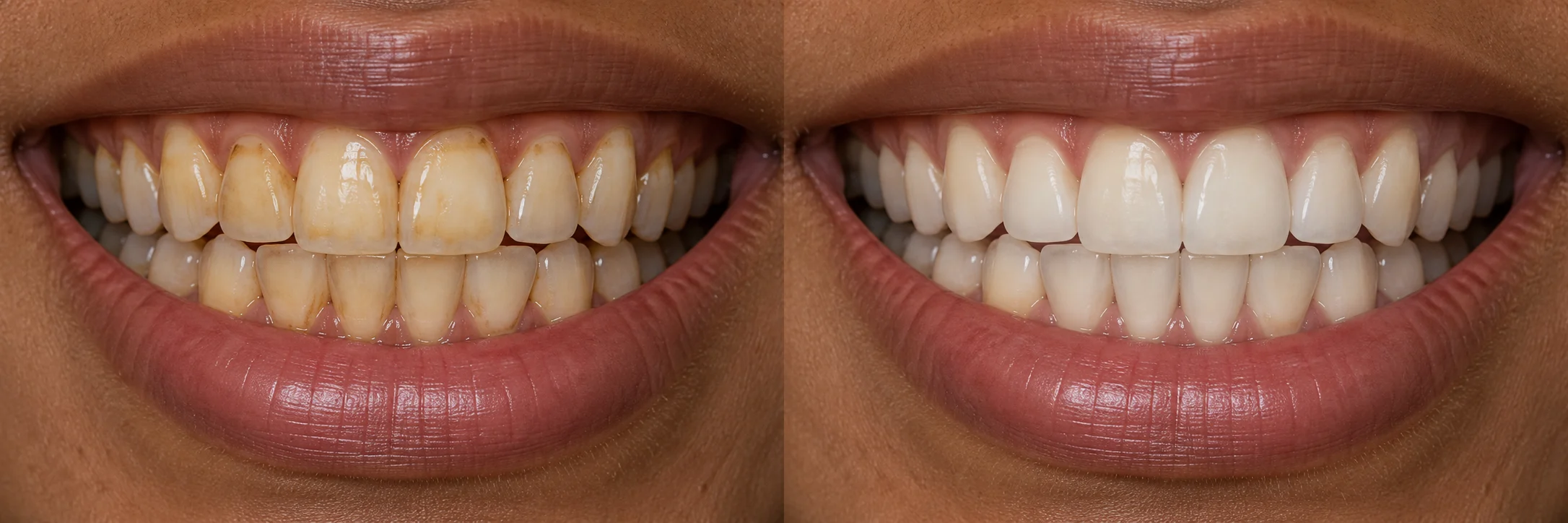
Teeth whitening gives you a lighter shade without drilling or reshaping a tooth. Its main risks are short-term sensitivity and gum irritation.
- Leaves the tooth whole. Nothing is drilled, filed or covered.
- A visible change can come in one appointment with in-office whitening, depending on the stain.
- Pairs with take-home trays for touch-ups later.
- Starts from a clean surface. A dental cleaning removes buildup so the starting shade is your true tooth colour.
Does teeth whitening cause sensitivity?
Yes. Tooth sensitivity is the most common side effect of whitening. Gum irritation comes next.
The CDA says these problems usually resolve on their own. Stop and call your dentist if they appear.
The American Dental Association reports mild to moderate sensitivity in up to two-thirds of people early in a bleaching course. In studies of trays and strips, it had passed by about the fourth day after treatment for most people. Gum irritation comes from gel touching the gums, through a loose tray or a gap in the gum barrier.
Overuse carries its own risk. The CDA lists tooth pitting and nerve damage as possible effects of repeated or excessive bleaching. Use only the gel and wear time your dentist gives you.
[IMAGE alt="A patient in orange protective glasses lies back as a blue whitening lamp shines on the front teeth, with the lips held back by a retractor" src=teeth-whitening.webp] [remove until patient consent is confirmed]
Is Teeth Whitening Right for You?
Teeth whitening suits adults with healthy teeth and gums who want lighter natural teeth. It starts with an exam. The dentist looks for what is causing the colour and whether bleaching will change it.
Crowns, veneers and fillings do not lighten. The CDA notes they can look darker next to whitened teeth.
Planning new crowns, veneers or dental bonding? Whiten first, so the new work matches your new shade. A European Commission scientific committee advises waiting one to two weeks after bleaching before new bonded work goes on.
A single tooth that turned dark after a root canal may need a different approach. The CDA describes bleaching it from the inside, which carries a small risk of damage to the root, so ask the team whether it is offered and suits your tooth.
Who should not whiten their teeth?
Wait or skip whitening if one of these applies to you:
- Pregnant people. The CDA advises waiting until after pregnancy, since bleaching products have not been tested in pregnant women.
- Children under 12. The CDA says bleaching products should not be used for them.
- Untreated decay or gum disease. Peroxide can harm inflamed gums and reach the nerve through decay or a leaking filling. Have fillings or gum disease treatment done first.
- Teeth with exposed roots or worn enamel. Talk to the dentist first, since gel reaches the nerve more easily through them.
- Front teeth with crowns, veneers or large fillings. They will not change shade, so whitening can leave a mismatch.
What Your Teeth Whitening Visit May Include
A teeth whitening visit starts with a check of your teeth, gums and current shade, then moves on to the whitening and aftercare.
Your visit may include:
- Smile assessment
- Tooth shade comparison
- Sensitivity check
- Professional whitening treatment
- Take-home whitening guidance
- Aftercare instructions
For in-office whitening, the gums are protected before the gel goes on the front of the teeth. The team explains each step of the system it uses, and your new shade is compared with the old one.
In-Office or Take-Home Whitening: Which Works Better?
In-office whitening works faster. Take-home trays take days to weeks but also lighten teeth. The CDA says gel strength and delivery decide how white, how even and how fast the change is.
Lights are a common question. The CDA says light-assisted or laser bleaching works faster but has not been shown to make teeth whiter. Ask the team which approach or mix of the two suits you.
| In-office whitening | Take-home trays from a dentist | Store-bought strips and kits | |
|---|---|---|---|
| How it works | Stronger gel placed by the dental team | Gel worn at home in trays made for your teeth | One-size strips or trays |
| Time to a result | Often one appointment, sometimes more | Daily wear for about 1 to 4 weeks in published studies | Varies by product |
| Gum protection | Barrier placed by the team | Trays fitted to keep gel off the gums | Generic fit that can leak gel |
| Dentist checks first | Yes | Yes | No |
| Wrong choice when | You have untreated decay, gum disease or strong sensitivity | You will not wear the trays as directed | You have front-tooth dental work or sensitive teeth and nobody has checked |
How strong is whitening gel, and what does Health Canada allow?
Health Canada regulates peroxide whitening products sold as cosmetics. Its Cosmetic Ingredient Hotlist sets no single maximum strength for them.
A product above 3% hydrogen peroxide needs a clinical study showing the peroxide in saliva stays at or under 3% during use. For scale, 10% carbamide peroxide equals about 3% hydrogen peroxide.
The Health Canada rules for peroxide whitening products also require label warnings against use by children under 12. The ADA puts dentist-supplied take-home gels at 10% to 38% carbamide peroxide, stronger than store products.
What about salons and home remedies?
Salons and studios sell whitening sessions too. The CDA says bleaching should be done only under a dentist's care.
Whitening toothpaste removes surface stain only. For oil pulling, our post on whether coconut oil whitens teeth looks at the evidence.
What Causes Teeth to Look Darker?
Teeth look darker from stain on the surface and from colour changes inside the tooth. Surface stain responds well to whitening. Stain inside the tooth is harder to shift.
Common causes include:
- Coffee and tea
- Red wine and cola
- Smoking or tobacco use
- Aging, as enamel thins and the darker layer beneath shows through
- Tooth decay
- Certain medications
- Dental trauma
- Fluorosis and other deep internal stains
The CDA notes that patchy colour from medication, aging or fluorosis can whiten unevenly. In that case the dentist may talk with you about dental veneers or bonding to even out the colour of your smile.
How Much Does Teeth Whitening in North York Cost?
Other Toronto clinics publish prices of about $450 to $650 for one in-office whitening session. Custom take-home trays with gel run about $200 to $350 at other Toronto clinics. Your own cost comes in a written estimate after an exam.
What moves the price:
- In-office whitening, take-home trays, or both
- How much gel or how many sessions your stain needs
- A cleaning or fillings first
- Touch-up gel later
Direct billing to insurance is available, and you can ask about financing options.
The Canadian Dental Care Plan lists teeth whitening as an exclusion. CDCP can still help pay for the exam, cleaning or fillings you may need first. See how CDCP works at Jane Clair Dental.
Teeth Whitening FAQs
Patient feedback
What Our Patients Are Saying
We’re proud of the relationships we build with our patients. Read feedback from individuals and families who have trusted us with their dental care.
Really happy I came here! They accept the CDCP, which made my visit affordable and stress-free. Great service and friendly team!
FadendasPatient feedback
Hugh describes a long relationship with the clinic, having attended for nine years at the time of his review.
Merna shares that she enjoys attending dental visits with the rest of her family.
Frank recommends the clinic and describes the dentist and staff as friendly and knowledgeable, which helped him enjoy his dental visits.