Dr Reddy was so kind and understood my problem well. Clinic was clean and the staff was very friendly.
Custom Dentures North York: Full, Partial and Immediate
Dentures are removable replacement teeth made to fit your mouth. Jane Clair Dental Clinic provides custom dentures in North York at 2698 Jane St for people missing some or all teeth.
Jane Clair Dental is a dental office, so a dentist examines your mouth and plans and fits your denture.
Dentures at a glance
- A full denture replaces every tooth in one jaw and a partial denture fills the gaps between your own teeth.
- New dentures take a few weeks to get used to. Some people need a few months.
- Dentures last about 7 to 10 years on average.
- A standard complete denture starts at about $1,100 to $1,200 per arch at other Toronto clinics, before lab fees at some.
- The Canadian Dental Care Plan helps pay for dentures if you qualify.
What Are Dentures?
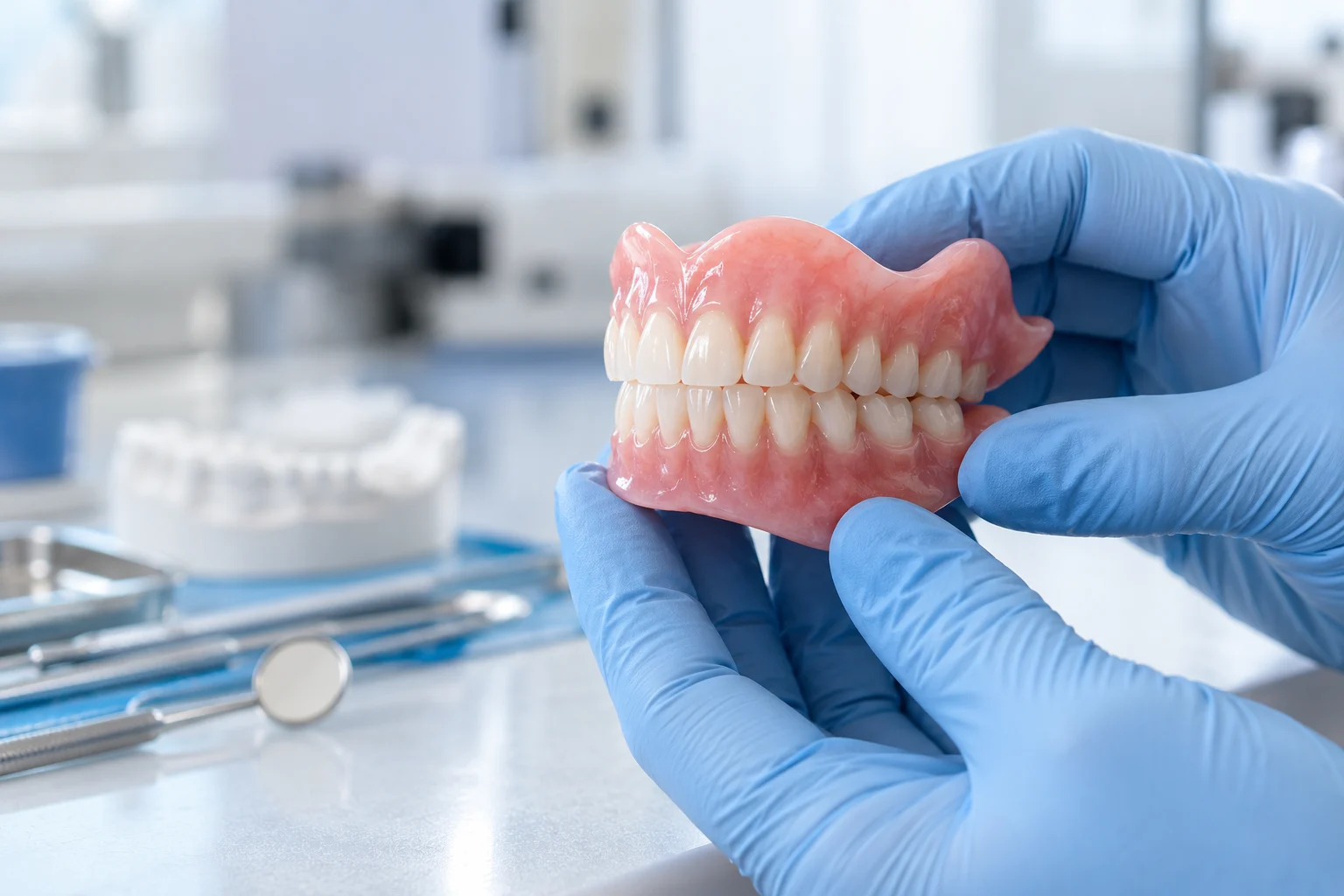
Dentures are custom-made replacement teeth set in a gum-coloured base that replace missing teeth in the upper jaw, the lower jaw or both.
A full denture rests on your gums. A partial denture also clips onto the teeth you still have and fills the gaps between them.
How Do Dentures Rebuild a Smile?
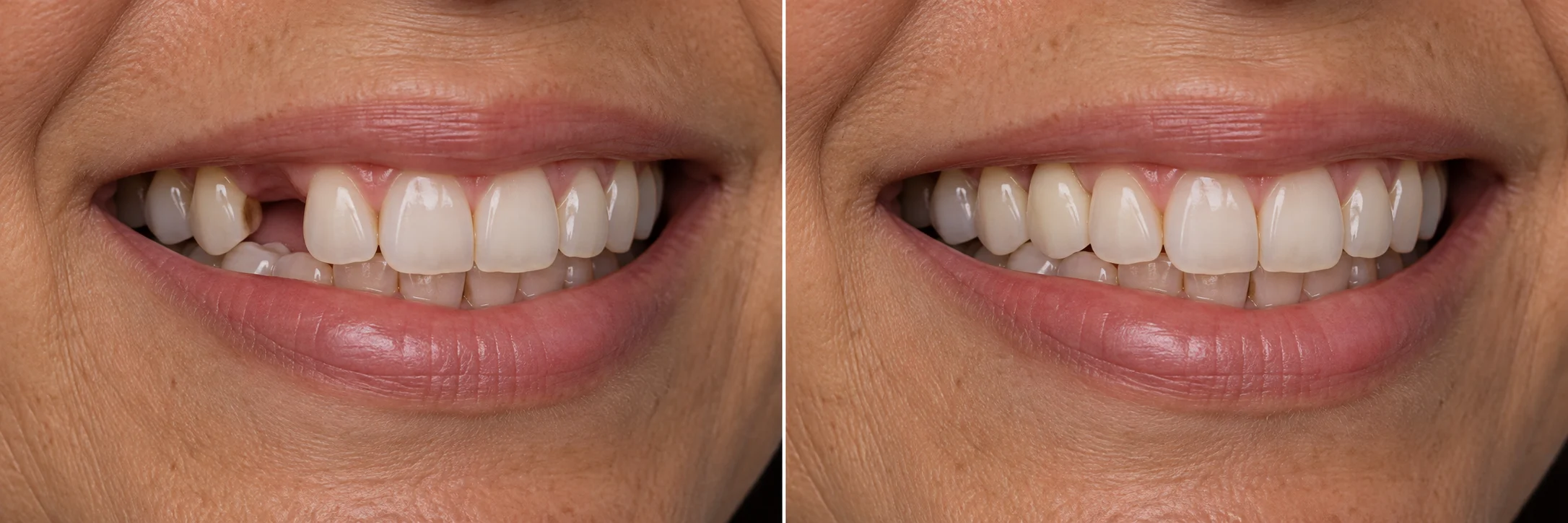
Dentures rebuild a smile by putting teeth and gum back where they were lost. The base holds out your lips and cheeks and softens the sunken look that follows tooth loss. Our post shows pictures of dentures that look real.
The teeth are shaded and shaped to suit your face and your dentist adjusts the fit as your mouth changes.
What Are the Benefits and Drawbacks of Dentures?
The main benefits of dentures are easier chewing, clearer speech and a fuller face. They cost less upfront than implants.
- One appliance for a whole arch.
- Easier chewing and a wider diet.
- Clearer speech.
- Relines and repairs as your mouth changes.
Dentures have limits too. A removable denture can shift or slip when you talk or chew.
Your jawbone also shrinks after teeth are lost, so the fit loosens over the years. A denture that is not cleaned or adjusted can cause sore spots and gum infections.
Our guide to lower denture problems and solutions covers the usual fixes for a lower denture that keeps moving.
[IMAGE src=Dentures.webp]
What Happens at Your Denture Consultation?
At a denture consultation your dentist checks your gums, jawbone, remaining teeth and bite. Digital X-rays show how much bone is there.
You then talk about what you want and the dentist explains which type suits your mouth. The choice comes down to how many teeth are missing and for how long, the shape of your jawbone, the health of your remaining teeth and whether you want implants.
What Does Denture Treatment Include?
Denture treatment takes several visits, and each step builds on the one before. The timing depends on the denture type and on any extractions that need to heal first.
- Exam and digital X-rays to plan the denture.
- Any tooth extractions or gum treatment your mouth needs first.
- Impressions of your gums and remaining teeth. A dental lab builds the denture from them.
- Fitting. Your dentist finds spots that press on your gums and adjusts them.
- Follow-up visits to fine-tune the fit as your gums settle.
What Types of Dentures Are There?
The four main types of dentures are full, partial, immediate and implant-held. The right one depends on how many teeth you have left and how much bone supports them.
| Type | Who it suits | Removable? | When it is the wrong choice |
|---|---|---|---|
| Full (complete) | All teeth missing in one jaw | Yes | You still have healthy teeth worth keeping |
| Partial | Some healthy teeth remain | Yes | The teeth it clips onto are loose or decayed |
| Immediate | Teeth are coming out and you want no gap | Yes | You expect a final fit from day one |
| Implant-held | You want a denture that moves less | Some snap out, some stay fixed | Too little bone, or health issues that rule out surgery |
Full Dentures
A full denture, also called a complete denture, replaces all the teeth in your upper or lower jaw. An upper denture covers the roof of your mouth for support and a lower one sits on the ridge of your jawbone. A conventional full denture is made once your gums heal after extractions, which can take several months.
Partial Dentures in North York
A partial denture replaces missing teeth when you still have healthy teeth of your own. Clasps or a metal frame hold it to those teeth.
You take it out to clean it and brush the teeth around it. To see how a partial changes a smile, read partial dentures before and after.
Immediate Dentures
An immediate denture goes in right after your teeth are removed, so you do not start out with a gap while you heal. Your gums shrink as they heal, so expect the denture to need adjusting, relining or replacing within about a year.
Implant-Retained and Implant-Supported Dentures
These dentures attach to dental implants in your jaw, so they move less than a regular denture. Our page on implant-supported dentures explains the surgery and the healthy bone they need. Implant surgery carries risks: an implant can fail to fuse with the bone, the site can get infected, and nerve injury can leave numbness that lasts.
What Is a Better Option Than Dentures?
A dental implant or a dental bridge is the main alternative to dentures. Neither suits everyone, and dentures remain the simpler choice when many teeth are missing or surgery is not an option.
A dental bridge suits one to three missing teeth in a row with healthy teeth beside the gap. Dental implants replace the root as well as the tooth and help stop bone loss. They need surgery, healthy bone and a larger budget.
Are dentures better than your own teeth? No, and keeping healthy teeth helps preserve your jawbone. Ask whether a tooth can be saved before it comes out.
How Do You Care for Dentures?
Clean your dentures every day and keep them in water whenever they are out of your mouth. Your gums need daily care too.
- Brush your gums, tongue, palate and any remaining teeth with a soft brush every morning and night.
- Rinse the denture after meals.
- Brush it daily with a soft brush and a non-abrasive denture cleaner. Regular toothpaste can scratch it.
- Clean it over a folded towel or a sink of water. A dropped denture can crack.
- Store it in water or denture solution so it does not dry out and warp. If your partial has metal clasps, use plain water unless your dentist names a product that is safe for metal.
Checkups let your dentist check the fit and your gums.
When Do Dentures Need a Repair, Reline or Adjustment?
Dentures need a dental visit when they slip, rub, click when you talk, crack or start to hurt. Book one too if your denture is more than 10 years old.
Never adjust a denture yourself. Home fixes can ruin the fit for good.
A reline adds new material to the fitting surface so the denture sits snugly again. Bring every piece of a broken denture to the appointment.
Red or bleeding gums under a denture and bad breath can point to gum disease or a fungal infection. Call 911 or go to the nearest hospital emergency department if you have trouble breathing or swallowing, swelling that spreads toward your eye or neck, fever with facial swelling, or bleeding that will not stop.
How Much Do Dentures Cost in North York?
Denture prices depend on the type, how many arches you replace and the work your mouth needs first. These are other Toronto clinics' published prices:
- A standard complete denture starts at about $1,100 to $1,200 per arch at other Toronto clinics, before lab fees at some.
- A standard lower complete denture starts at about $1,200 to $1,400.
- A cast metal partial denture for one arch costs about $1,000 to $1,600.
Your own cost comes in a written estimate after an exam. Extractions, gum treatment, X-rays and the later reline of an immediate denture add to the total.
Direct billing is available and you can ask about financing options. Before you pick the lowest quote, read what to check before choosing low-cost dentures. Government coverage is in the FAQ below.
Dentures FAQs
Patient feedback
What Our Patients Are Saying
We’re proud of the relationships we build with our patients. Read feedback from individuals and families who have trusted us with their dental care.
Really happy I came here! They accept the CDCP, which made my visit affordable and stress-free. Great service and friendly team!
FadendasPatient feedback
Hugh describes a long relationship with the clinic, having attended for nine years at the time of his review.
Merna shares that she enjoys attending dental visits with the rest of her family.
Frank recommends the clinic and describes the dentist and staff as friendly and knowledgeable, which helped him enjoy his dental visits.