Dr Reddy was so kind and understood my problem well. Clinic was clean and the staff was very friendly.
Gum contouring in North York: what it can change in your smile
Gum contouring in North York at Jane Clair Dental removes a small amount of extra gum tissue and reshapes the gum line, so more of each tooth shows when you smile. It suits healthy gums that sit too low or look uneven. It is minor gum surgery, done with the area numbed.
The clinic is at 2698 Jane St, close to Jane and Finch. Every plan starts with an exam to find what is causing the extra gum on show.
Key points
- Gum contouring corrects a gummy smile, an uneven gum line or teeth that look short
- Removed gum tissue cannot be put back
- Gum disease and decay are treated first
- A gummy smile caused by the jaw or the upper lip needs a different treatment
- The gum surface heals in about a week for most people
- Your own cost comes in a written estimate after an exam
What Is Gum Contouring?
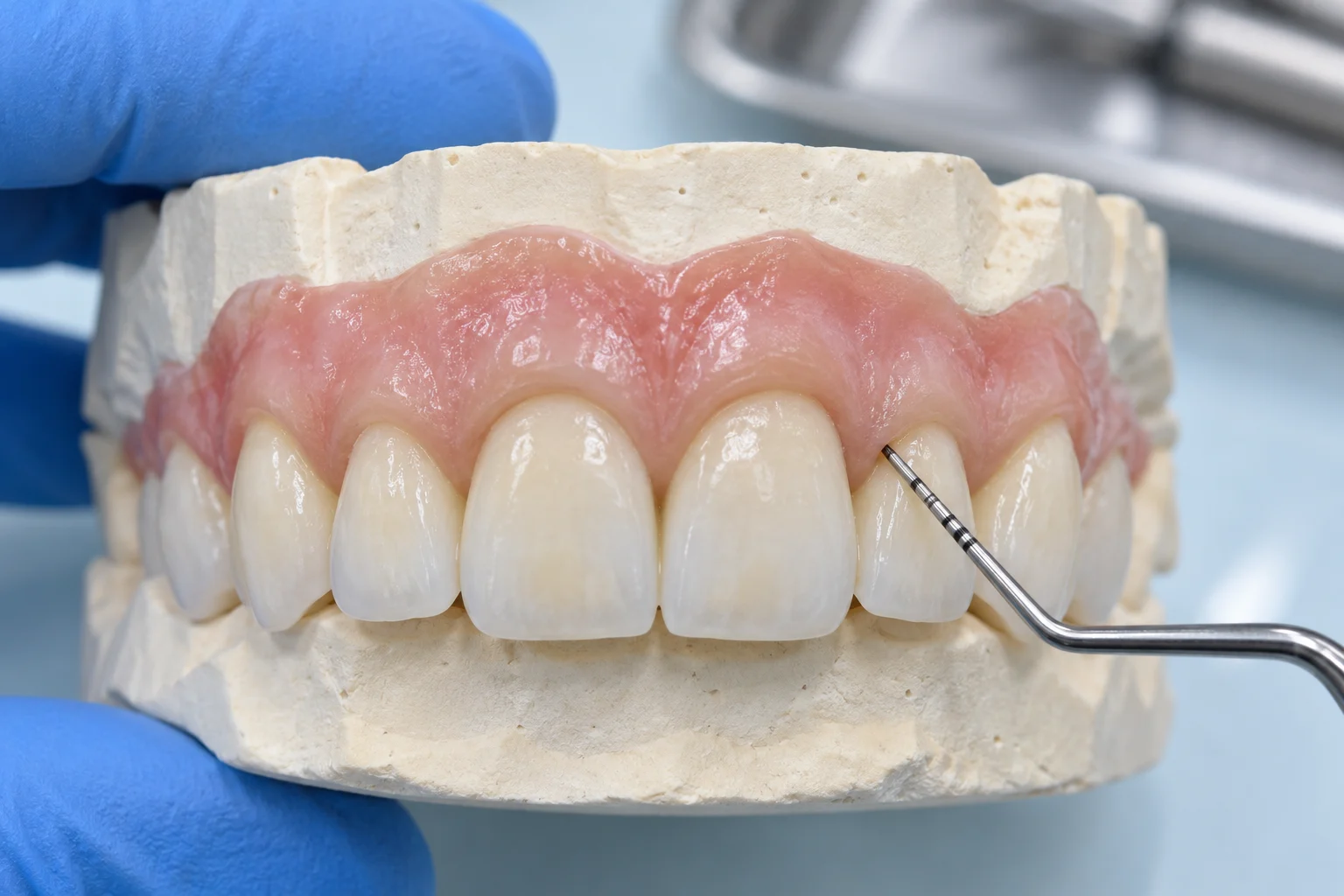
Gum contouring, also called gum reshaping or gingivoplasty, is a procedure that trims and shapes the gum around your teeth to make the gum line even. Only gum is removed. Your teeth are not drilled.
Crown lengthening is a related procedure that exposes more tooth. It can reshape gum alone or gum and bone, and the bone version heals longer.
Dentists remove the gum with a small scalpel or a dental laser. A laser seals the tissue as it cuts, so stitches may not be needed. Ask the team whether laser gum contouring is offered here and whether it suits your case.
- Evens out an uneven gum line
- Reduces how much gum shows when you smile
- Prepares the gum line for veneers or crowns
What can gum contouring fix in your smile?
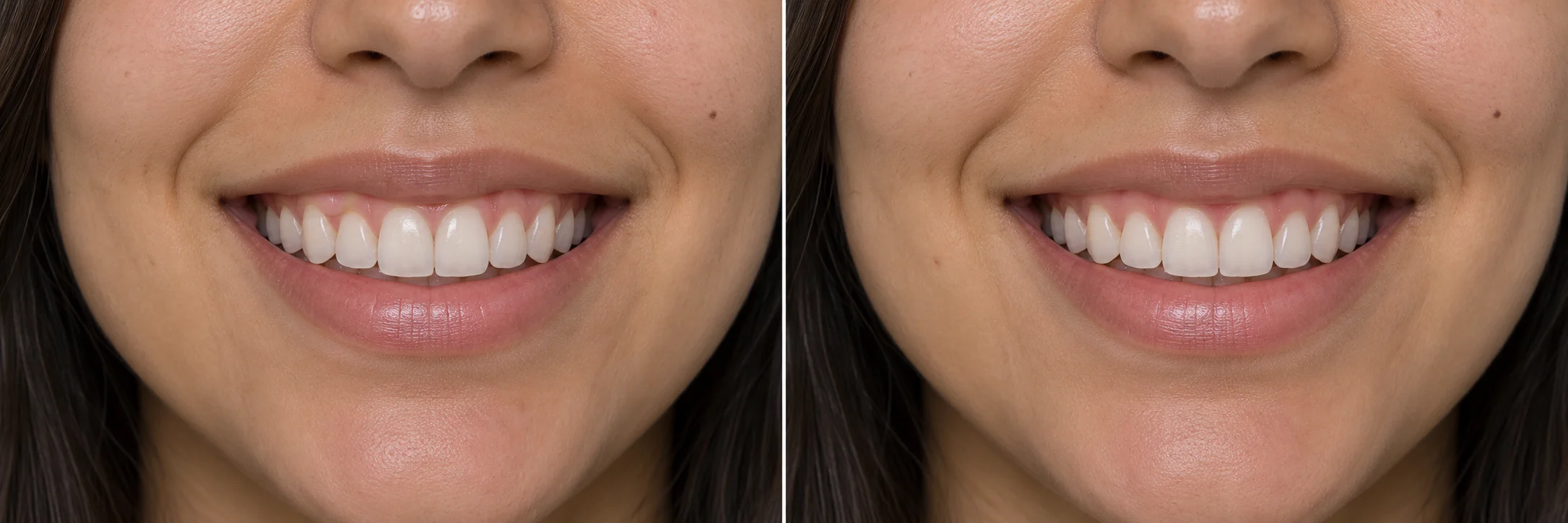
Gum contouring fixes problems caused by extra gum: a gummy smile, a gum line that sits higher on some teeth, and teeth that look short or boxy. In many of these smiles the teeth are full length. The gum never moved back as the teeth came in. So it still covers part of each tooth.
Gum can also overgrow around braces. Contouring helps before cosmetic work too, so new veneers or crowns sit against an even gum line.
What gum contouring will not fix
Gum contouring takes gum away. It cannot add gum where the gum line has pulled back. Receding gums and exposed roots need another treatment, such as a gum graft. Bleeding or swollen gums point to gum disease, and that is treated first.
Who is gum contouring not for?
Gum contouring is not for anyone with active gum disease, untreated cavities or another mouth problem that needs care first. The dentist checks your gums, teeth and bone levels at the exam.
It is also the wrong treatment when the gummy smile comes from the jaw or the lip. A 2024 systematic review describes three main causes. Each needs its own treatment.
| Cause of the gummy smile | What is happening | Treatment that fits |
|---|---|---|
| Extra gum over the teeth | Gum still covers part of full-length teeth | Gum contouring, with bone reshaping (crown lengthening) in some cases |
| Upper jaw grown too long | The bone pushes the teeth and gums down | Orthodontic treatment or jaw surgery. Gum contouring alone will not correct it |
| Upper lip lifts too high | The lip muscles pull the lip up further than average | Treatments that limit how far the lip lifts. Ask the team which options suit you |
Tell the dentist if you smoke. Smoking slows gum healing. Mention any condition or medicine that affects bleeding before treatment is booked.
What are the benefits and limits of gum contouring?
- Less gum showing above the teeth
- Teeth that look longer and less boxy
- A smoother gum line from tooth to tooth
- A better base for veneers, crowns or bonding
The main limit is that removing gum is permanent. Removed tissue cannot be put back. Plan the new gum line with the dentist before any tissue is removed.
The result also depends on the bone underneath. If bone sits too close to the new gum edge, the gum can grow back toward where it was.
[IMAGE alt="Close-up of a patient's mouth held open by a cheek retractor, with a gloved hand touching a lower tooth with a green dental applicator" src=close-up-of-teeth-dental-checkup-in-the-dental-of-2026-01-11-10-50-00-utc-1-1.webp] [remove until patient consent is confirmed]
How does the dentist plan your gum contouring?
Planning starts with an exam and digital X-rays to check gum health and the bone around each tooth. The dentist looks at how much gum shows when you smile, the shape of each tooth and where your upper lip sits. Bone levels decide whether contouring alone will hold.
Bring your questions. Say what bothers you about your smile. Ask to see where the new gum line will sit before anything is removed.
What happens during a gum contouring visit?
- The dentist numbs the area with a local anesthetic, and you say if anything hurts
- The new gum line is marked on the gum
- The extra gum is removed and the edges are shaped
- The dentist explains whether stitches or a soft dressing are used
- You leave with aftercare instructions
What are the risks of gum contouring?
The main risks of gum contouring are soreness, bleeding, swelling and sensitive teeth in the first days. Serious problems are uncommon. Discuss these risks before you agree to treatment:
- Soreness and swelling for a few days
- Bleeding from the treated gum
- Teeth that feel sensitive to hot and cold for days or weeks
- Infection
- Gum that grows back toward its old position
- Gum that shrinks back further than planned and shows more root
- A result that is less even than you hoped
Some of these need a second procedure. Cleveland Clinic advises waiting eight to 12 weeks before deciding whether one is needed.
Crown lengthening that removes bone is different. It is a bigger procedure. A review of crown lengthening puts soft tissue stabilization at six months or more after bone removal.
What is recovery like after gum contouring?
Recovery after gum contouring takes about a week for the gum surface, and most people return to work or school after one to two days. The gum line keeps settling. The same review gives four to six weeks for gum tissue to mature after a gum-only procedure.
Follow these steps as you heal:
- Eat soft foods such as eggs, yogurt and pasta for the first few days
- Skip hard, crunchy or spicy food for about a week
- Brush gently, using the steps the dentist gives you
- Avoid hard exercise and heavy lifting for the first few days
- Avoid smoking and alcohol until the gum heals
- Ask the dentist which pain relief suits you
Call the clinic at (416) 742-3636 if bleeding does not stop with gentle pressure, pain gets worse instead of better, you have a fever or you see pus.
Call 911 or go to the nearest hospital emergency department if you have trouble breathing or swallowing, swelling that spreads toward your eye or neck, fever with facial swelling, or bleeding that will not stop.
How much does gum contouring cost in Toronto?
Gum contouring has no single price, because the fee depends on how much reshaping your gums need. These things change the cost:
- How many teeth are treated
- Whether bone also needs reshaping
- The method used
- Whether veneers, crowns or bonding are part of the plan
Your own cost comes in a written estimate after an exam. Direct billing is available. Ask about financing options.
Private insurance plans set their own rules. Ask your insurer for a predetermination before treatment. Coverage can change when the work is crown lengthening needed for a crown.
The CDCP Dental Benefits Guide lists cosmetic treatment and crown lengthening as exclusions, so the CDCP does not pay for either. Read how the plan works on our CDCP page.
Gum contouring FAQs
Patient feedback
What Our Patients Are Saying
We’re proud of the relationships we build with our patients. Read feedback from individuals and families who have trusted us with their dental care.
Really happy I came here! They accept the CDCP, which made my visit affordable and stress-free. Great service and friendly team!
FadendasPatient feedback
Hugh describes a long relationship with the clinic, having attended for nine years at the time of his review.
Merna shares that she enjoys attending dental visits with the rest of her family.
Frank recommends the clinic and describes the dentist and staff as friendly and knowledgeable, which helped him enjoy his dental visits.