
Can You Sleep With Dentures In? Why Taking Them Out Matters
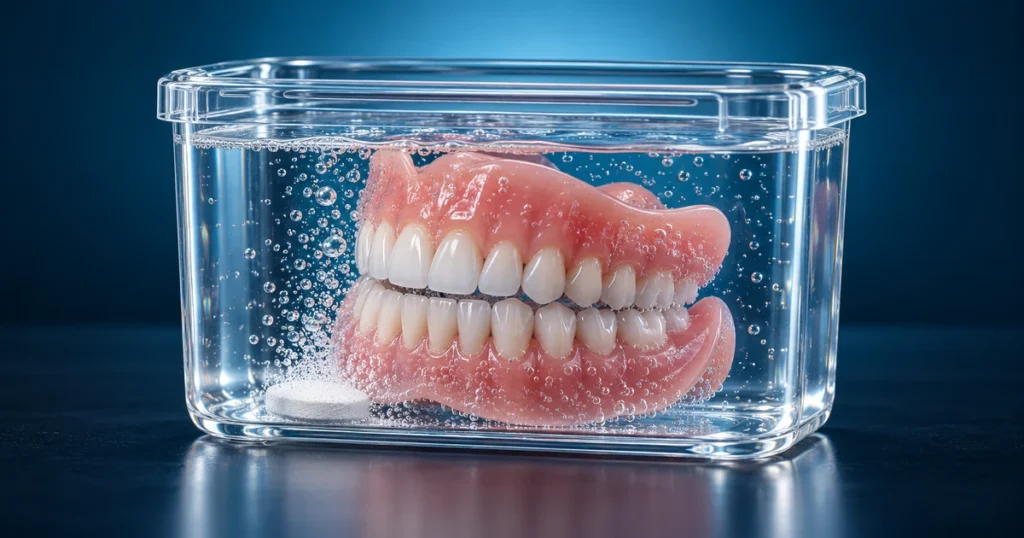
Most people should take their dentures out at night. Time without them gives your gums a rest and lets you clean the denture properly. Sleeping in them traps plaque and yeast against the gums and can leave the tissue red and sore.
Can you sleep with dentures in at all? Here is why the nightly break matters, the short exceptions and what to do at bedtime.
Key takeaways
- Out at night and into water: the standard advice for most wearers.
- New dentures can be an exception: follow your dentist's plan for the first days.
- Overnight wear breeds germs: plaque and yeast under the base can inflame the gums.
What can happen if you sleep in your dentures?
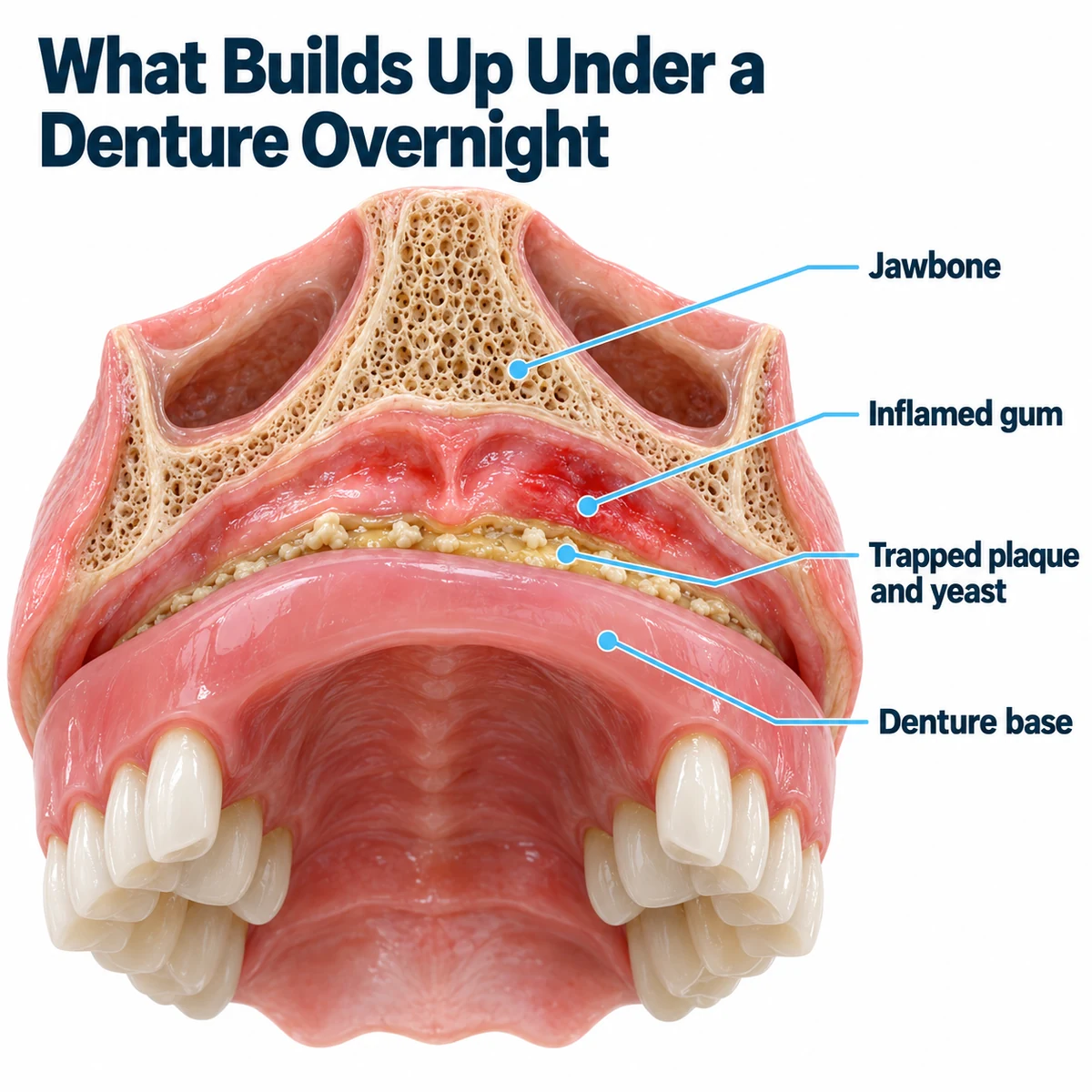
Overnight wear raises the risk of sore or infected gums and bad breath.
- Denture stomatitis: a yeast called candida grows under the base and leaves the gums red and sore.
- Bad breath and gum problems: plaque trapped against the gums and any natural teeth feeds bacteria.
- Irritated gums: the tissue never gets a break from the pressure, and a loose fit adds rubbing.
- Pneumonia in very old adults: in a Tokyo study of people aged 85 and older, denture wearers who slept in their dentures had about twice the risk of serious pneumonia over three years. It shows a link, not proof of cause.
Caring for someone who cannot remove their own dentures? Take them out at bedtime and tell their doctor about a new cough, fever or trouble breathing.
Book a visit for a denture that rubs, slips or hurts, and for red or bleeding gums under it.
Call 911 or go to the nearest hospital emergency department for trouble breathing or swallowing, or swelling moving toward your eye or neck. The same goes for a fever with a swollen face or bleeding you cannot stop. Our dental emergencies page covers the next steps.
When is it okay to sleep with dentures in?
Only when your dentist asks you to. This happens most with brand-new dentures or an immediate denture placed the day teeth come out.
After that, take the denture out each night. Many dentists say the same for removable snap-in dentures, as our post on snap-in dentures explains.
How should you care for dentures at night?
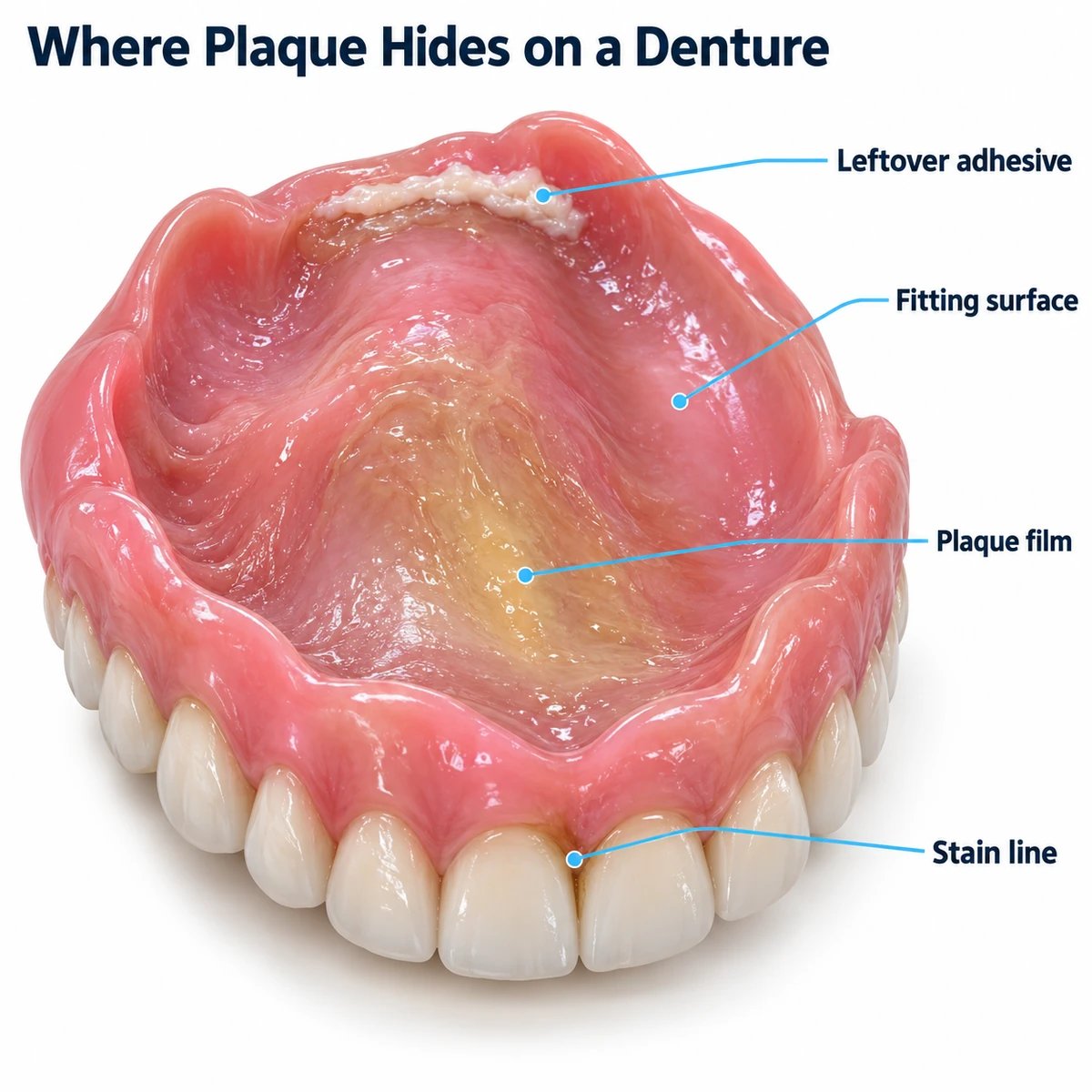
Clean the denture and your mouth, then let the denture soak overnight.
- Rinse off food under running water.
- Brush it gently with a denture brush and a non-abrasive cleaner, never toothpaste, over a towel or a basin of water.
- Soak it overnight in water or a denture solution, never in hot water or bleach. For a partial with metal clasps, use plain water unless your dentist approves a cleaner for metal.
- Clean your mouth by brushing your gums, tongue, palate and any natural teeth.
At Jane Clair Dental in North York, denture checkups look at the fit and your gums. Our dentures page explains relines and repairs.
Denture rubbing or slipping? Book a visit or call (416) 742-3636.
Frequently asked questions
What if I fall asleep with my dentures in?
Take them out when you wake and clean the denture and your mouth. Make removal part of your bedtime routine.
Should partial dentures come out at night?
Yes, unless your dentist asks you to keep a new one in for the first days. Clean it and brush your natural teeth before bed. A partial worn in bed can come loose and be swallowed or breathed in. If yours is missing when you wake, call us at (416) 742-3636, and call 911 if you are coughing hard or struggling to breathe.
Can dentures be stored dry overnight?
No. A denture left to dry can lose its shape, so keep it in water or solution.