Dr Reddy was so kind and understood my problem well. Clinic was clean and the staff was very friendly.
Restore Missing Teeth with Dental Implants
A dental implant is a small post placed in your jawbone to replace the root of a missing tooth. Once the bone heals around it, the post holds a crown, a bridge or a denture. Jane Clair Dental Clinic provides dental implants in North York at 2698 Jane St, from the first exam to the final tooth.
You can replace one tooth, several teeth or a whole arch. After an exam you get a plan and a written estimate before treatment begins.
Dental implants at a glance
- The main risks are infection, nerve injury and an implant that does not fuse with the bone.
- Smoking, untreated gum disease and unmanaged diabetes raise the chance of problems.
- The implant post is one part of the cost. The abutment and crown are added to it.
What Are Dental Implants?
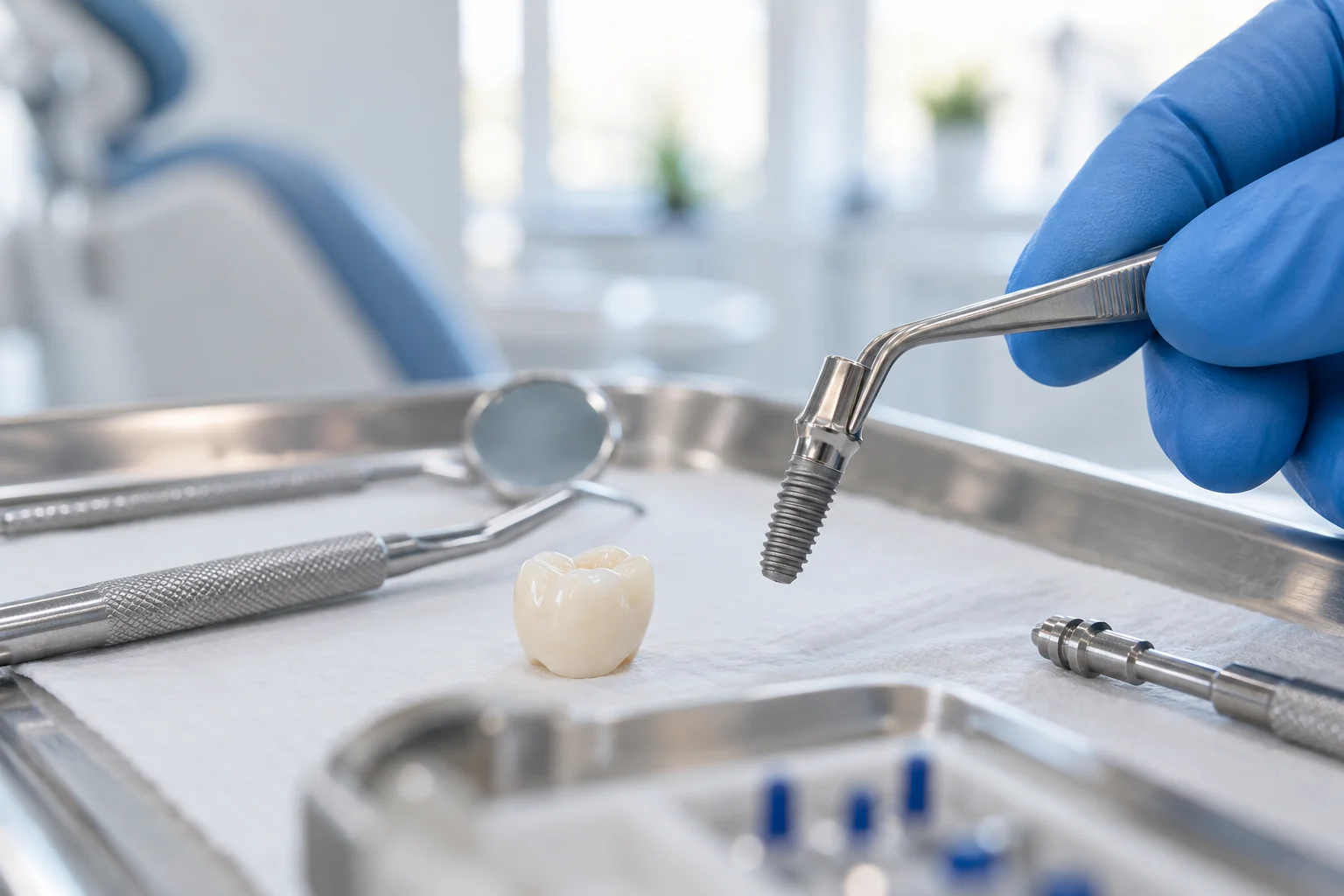
Dental implants, also called tooth implants, are artificial tooth roots placed in the jawbone. Most are made of titanium, a metal the body accepts well. Each implant has three parts:
- The post, which sits in the bone like a root
- The abutment, a small connector that rises just above the gum
- The restoration, which is the crown, bridge or denture you see
The post is fixed in your jaw and you do not take it out.
Why replace a missing tooth with an implant?
A missing tooth changes how you chew, speak and smile. The bone that held the root also shrinks over time. That can leave the face looking sunken.
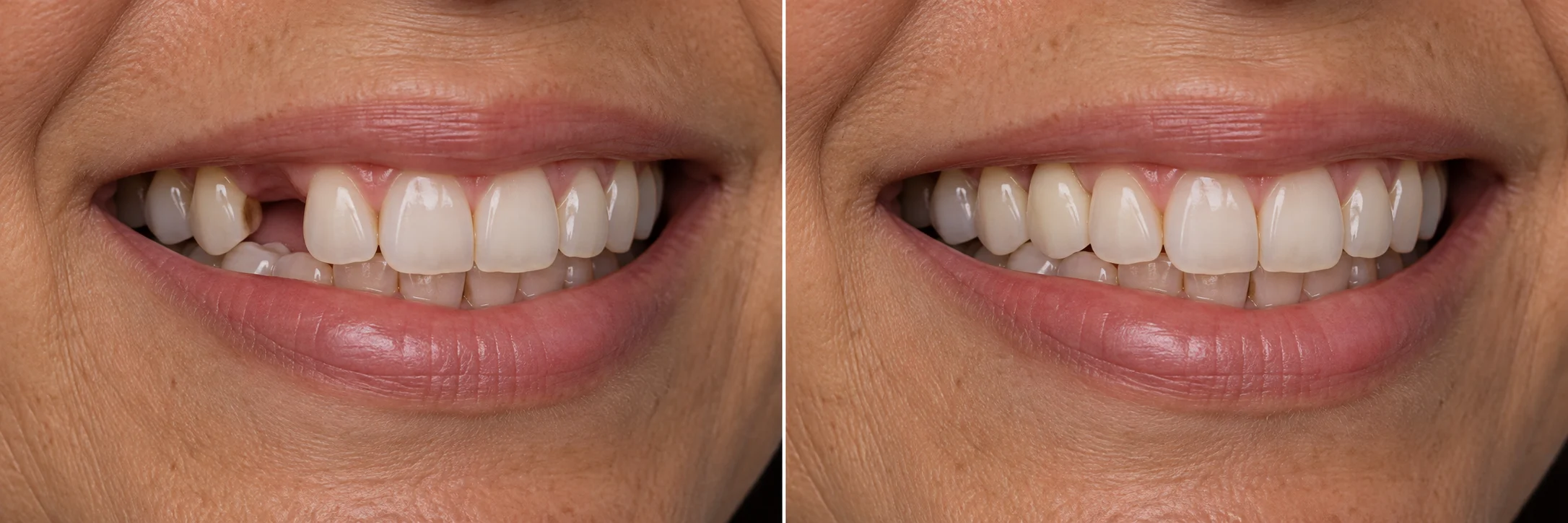
An implant fills the gap with a fixed tooth and gives the bone something to hold.
What are the benefits of dental implants?
Dental implants work much like natural teeth once they heal. They do not slip or click like a loose denture. And they cannot decay.
- Better chewing
- Clearer speech because the tooth stays put
- A crown shaded to blend with your other teeth
- A post that can last for life with good daily care
[IMAGE src=Dental-Implants.webp]
Dental implants North York: how the process works
Dental implant treatment runs in stages, with healing time between them.
- Exam and imaging. Your dentist checks your bone, gums, bite and health history. Digital X-rays show the bone, and a CT scan adds a 3D view when needed. Tell the dentist about every medicine and supplement you take.
- Plan and written estimate. You see the options, steps and cost before you agree.
- Placement. The area is numbed with local anaesthetic. The dentist opens the gum, prepares a small space in the bone and places the post. A few stitches close the gum.
- Healing. The jawbone grows onto the post and locks it in place. This is called osseointegration. Ask the team whether a temporary tooth suits you while you heal.
- Abutment and final tooth. Once the bone holds firm, the abutment and your crown, bridge or denture go on. Some cases need a small second procedure to uncover the post first.
Two of the clinic's dentists list implant work in their bios. The bio of Dr. Chaitanya Reddy says he "provides comprehensive dental implant services, including implant placement, restoration, and related surgical procedures."
The bio of Dr. Soham Brahmbhatt lists "implant placement and restoration" among his experience.
Dental implant types: one tooth, several teeth or a full arch
The type of implant you need depends on how many teeth are missing and how much bone you have. Implant treatment comes in four main forms.
Single tooth implant
A single tooth implant replaces one missing tooth with one post and one crown. The healthy teeth beside the gap are left as they are.
Implant-supported bridge
An implant-supported bridge uses two or more implants to hold three or more teeth in a row. You get fixed teeth without needing a post under every missing tooth.
Implant-supported denture
An implant-supported denture is held by implants, so it stays in place when you eat and talk. Our implant-supported dentures page covers snap-in options in detail.
Full-arch implants, All-on-4 and teeth in a day
A full-arch implant restoration replaces all your upper or lower teeth with one fixed set. Most plans hold it on four to six implants. All-on-4 is the name for a full arch on four implants.
"Teeth in a day" means temporary fixed teeth go on the same day as the implants. That depends on your bone and how firm the implants are at placement. Ask the team whether All-on-4 or teeth in a day is offered and suits your mouth.
Do you need a bone graft or gum treatment first?
You may need a bone graft if your jaw is too thin or soft to hold a post. Some grafts are done before placement and some during it. Active gum disease is treated first as well. Your dentist checks both at the exam.
What are your tooth replacement options in North York?
The three main tooth replacement options are a dental implant, a fixed bridge and a removable denture. Each suits a different mouth.
| Dental implant | Fixed bridge | Removable denture | |
|---|---|---|---|
| What holds it | A post in the jawbone | Crowns on the teeth either side of the gap | Rests on the gums |
| Teeth beside the gap | Left alone | Shaved down to take crowns | Not reshaped |
| Takes surgery | Yes | No | No |
| When it is the wrong choice | Your bone or health cannot support surgery | The teeth beside the gap are healthy and you want them left uncut | You want teeth that never come out |
Our dental bridges and dentures pages explain each one.
Who should not get dental implants?
Dental implants are not for everyone. You may need to wait, treat a problem first or choose another option if you have any of these:
- Active or untreated gum disease
- Severe bone loss in the jaw that a graft cannot rebuild
- Diabetes that is not under control
- Bone disorders or some autoimmune conditions
- Extensive tooth decay or trouble keeping your teeth clean
Smoking and vaping slow healing and raise the risk that an implant fails.
Your jaw must have finished growing, which is around age 18. There is no upper age limit. Seniors can have implants when their bone and general health allow it.
What to Expect After Dental Implant Placement
After implant placement you can expect swelling of the gum and face, some bruising, soreness at the site and minor bleeding. Stick to soft foods while the site heals.
Follow-up visits check how the bone is healing.
Call the clinic at (416) 742-3636 if swelling or soreness gets worse after the first few days. Call too for pus, fever, a loose implant or bleeding gums.
Call 911 or go to the nearest hospital emergency department if you have trouble breathing or swallowing, swelling that spreads toward your eye or neck, fever with facial swelling, or bleeding that will not stop.
What are the risks of dental implant surgery?
The main risks of dental implant surgery are infection and damage to nearby teeth or blood vessels. Nerve injury can cause pain, numbness or tingling in the teeth, gums, lips or chin. An upper implant can reach into the sinus and cause sinus problems.
Most of these problems are minor and treatable.
Nerve injury is rare. The numbness, tingling or pain it causes can last a long time and in a few cases is permanent. Tell your dentist straight away if numbness lasts after the freezing should have worn off.
A few implants never fuse with the bone. The dentist then removes the post and can try again once the bone heals, after about three months.
How long do dental implants last?
A dental implant post can last a lifetime with brushing, flossing and regular dental visits. That is why people call implants a permanent tooth replacement.
The crown on top wears with chewing, and your dentist can replace it without touching the post. Most crowns and bridges on implants last around 15 years. Most implant dentures last at least seven.
Four things shorten an implant's life:
- Poor cleaning around the post, which lets infection damage the gum and bone
- Smoking
- Grinding or clenching your teeth
- Health conditions that slow bone healing, such as unmanaged diabetes
How much does a tooth implant cost in North York?
Dental implants at Jane Clair Dental Clinic start from $3,500 for the implant component. Your total adds the abutment, the crown and any bone grafting or extraction you need. The dental implant cost calculator adds those parts up for different cases.
Your own cost comes in a written estimate after an exam.
Ask about financing options. Direct billing to insurance is available. Check with your insurer what it pays toward each part.
Dental Implant FAQs
[IMAGE src=Vector-3.png] [IMAGE src=SVG.png]
Patient feedback
What Our Patients Are Saying
We’re proud of the relationships we build with our patients. Read feedback from individuals and families who have trusted us with their dental care.
Really happy I came here! They accept the CDCP, which made my visit affordable and stress-free. Great service and friendly team!
FadendasPatient feedback
Hugh describes a long relationship with the clinic, having attended for nine years at the time of his review.
Merna shares that she enjoys attending dental visits with the rest of her family.
Frank recommends the clinic and describes the dentist and staff as friendly and knowledgeable, which helped him enjoy his dental visits.